
Best Plants for Shade UK: North Facing Garden Guide
Discover the best plants for shade UK gardens. Our guide covers north-facing garden ideas, ferns, hostas, and shrubs to transform your shady borders today.
Key takeaways
- In the UK, a north-facing garden is one that faces away from the equator, meaning the house itself often casts a shadow over the patio and rear borders for much of the day.
- These plants return year after year, often becoming more impressive as they mature.
- In a north-facing spot, you should look for evergreen varieties that maintain their presence during the winter months.
- Creating a beautiful garden in the shade requires a different approach to traditional sun-loving borders.
- Many gardeners struggle to find plants that will climb a cold, north-facing wall.
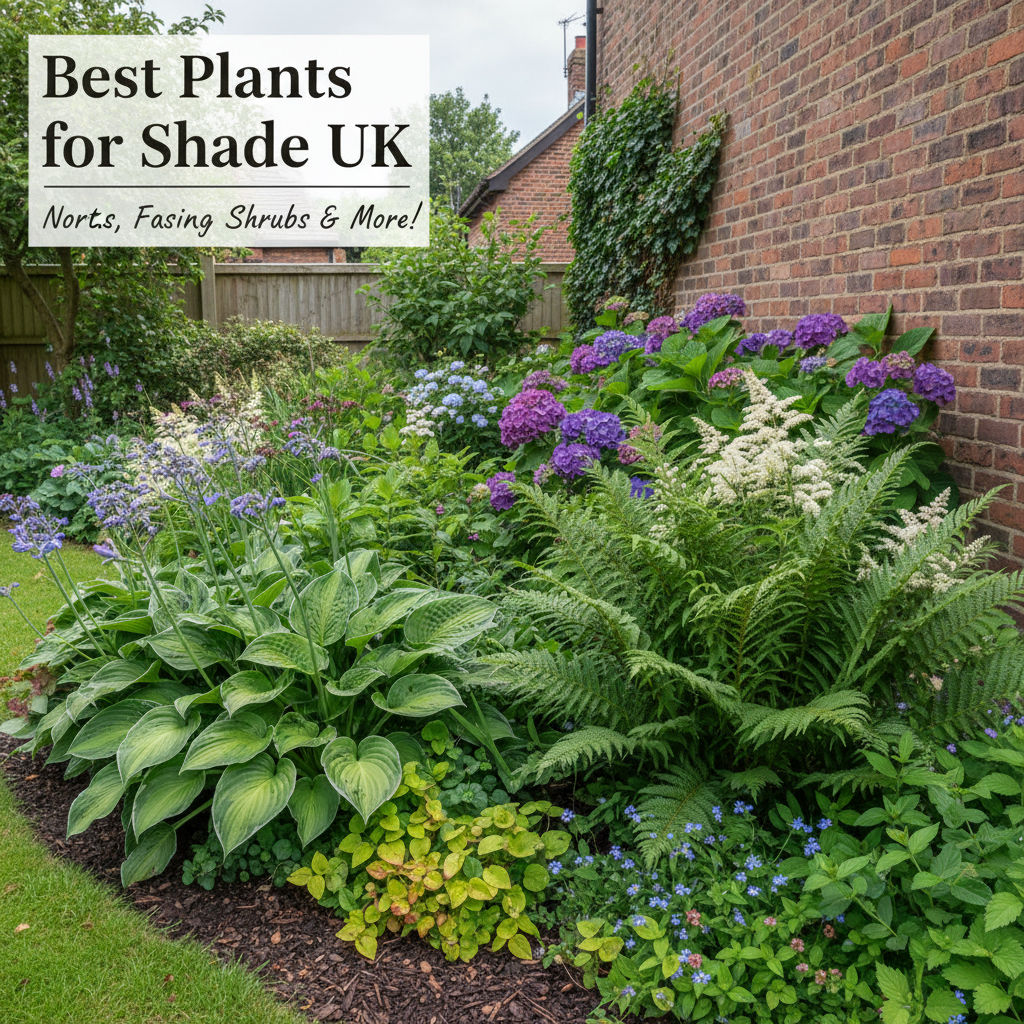
The best plants for shade UK gardens include perennials like Hostas, Bleeding Heart (Lamprocapnos spectabilis), and Hellebores, alongside shrubs such as Camellias and Hydrangeas. North-facing gardens thrive when using shade-tolerant species that appreciate damp, cool soil and can cope with limited direct sunlight, particularly those awarded the RHS Award of Garden Merit.
Top Tips for North-Facing Gardens
- Focus on Foliage: Use plants with variegated leaves to brighten dark corners.
- Soil Preparation: Add organic matter to improve moisture retention in dry shade or drainage in heavy clay.
- Vertical Interest: Utilise shade-tolerant climbers like Honeysuckle or Ivy for boundary walls.
- Seasonal Colour: Incorporate spring bulbs like Snowdrops and Bluebells that bloom before the canopy fills in.
- Watering Needs: North-facing walls often create a "rain shadow"; ensure regular watering during dry spells.
What Defines a North-Facing Garden in the UK?
In the UK, a north-facing garden is one that faces away from the equator, meaning the house itself often casts a shadow over the patio and rear borders for much of the day. These spaces are typically cooler, more humid, and receive less direct light than south or west-facing counterparts. However, far from being a "problem area," these conditions are ideal for many woodland species that struggle in the scorching midday sun of a south-facing plot.
Understanding the level of shade is vital. Deep shade (found under evergreen trees) is different from damp shade (common in clay-heavy UK gardens) or dry shade (often found at the base of walls). Choosing the right plant for the specific type of shade is the secret to a thriving garden.
Best Perennials for Shade UK
Perennials form the backbone of shade gardening. These plants return year after year, often becoming more impressive as they mature. In a north-facing garden, focus on plants that provide architectural interest through their leaves.
1. Hostas (Plantain Lily)
Hostas are the undisputed kings of the shade garden. They offer an incredible array of leaf colours, from the blue-grey of Hosta 'Sieboldiana' to the bright chartreuse of Hosta 'Sum and Substance'. According to RHS trials, variegated varieties are particularly effective at "lifting" the gloom of a dark corner.
2. Hellebores (Lenten Rose)
Hellebores are essential for winter and early spring interest. They produce nodding, cup-shaped flowers from February to April. They are exceptionally hardy and thrive in the heavy, moist soils often found in UK north-facing gardens.
3. Ferns
For a prehistoric, lush feel, ferns are unbeatable. The Dryopteris wallichiana (Jurassic Gold) and the Asplenium scolopendrium (Hart’s Tongue Fern) are particularly reliable in the UK climate. Ferns are excellent for adding texture and structure without the need for bright sunlight.
Top Shrubs for Shady North-Facing Borders
Shrubs provide the structural "bones" of the garden. In a north-facing spot, you should look for evergreen varieties that maintain their presence during the winter months.
| Shrub Name | Type | Best Feature | Ideal Conditions |
|---|---|---|---|
| Sarcococca confusa | Evergreen | Intense winter fragrance | Deep or partial shade |
| Camellia japonica | Evergreen | Stunning spring blooms | Acidic soil, sheltered shade |
| Hydrangea macrophylla | Deciduous | Large floral mopheads | Damp, cool soil |
| Mahonia x media | Evergreen | Bright yellow winter flowers | Tough, architectural foliage |
How to Design a North-Facing Garden: Step-by-Step
Creating a beautiful garden in the shade requires a different approach to traditional sun-loving borders. Follow this guide to transform your space:
- Assess Your Shade: Monitor the garden throughout the day in May or June. Note "damp shade" spots versus "dry shade" spots near walls.
- Improve the Soil: Most shade-loving plants prefer "woodland conditions" - rich, humic soil. Dig in plenty of leaf mould or well-rotted garden compost in October or March.
- Layer Your Planting: Start with a canopy layer (small trees like Acer palmatum), followed by a mid-layer of shrubs, and finally a ground layer of perennials and bulbs.
- Use Reflective Surfaces: Paint fences in light colours or use mirrors to bounce available light into the darkest corners of the garden.
- Plant with White Flowers: White blooms "glow" in the twilight and shade. Varieties like Astrantia major 'Lower Hope' or white Foxgloves are perfect for this.
Climbers for North-Facing Walls and Fences
Many gardeners struggle to find plants that will climb a cold, north-facing wall. Thankfully, several UK favourites are perfectly adapted to these conditions.
Hydrangea anomala subsp. petiolaris (Climbing Hydrangea): This is perhaps the best climber for a north-facing wall. It is self-clinging, meaning it doesn't require complex trellis systems once established, and it produces beautiful white lace-cap flowers in summer.
Lonicera periclymenum (Common Honeysuckle): While some honeysuckles prefer sun, our native varieties thrive in the dappled shade of a north-facing fence, providing a wonderful evening scent that is attractive to pollinators.
Our Expert Tips for Success in the Shade
"The biggest mistake gardeners make with north-facing plots is forgetting to water. Because shade feels cool, we assume the soil is moist. However, large buildings often 'block' the rain, leaving the soil beneath them bone dry." — Garden-Review Expert Panel
Dealing with Dry Shade
Dry shade is often considered the most difficult gardening challenge in the UK. This usually occurs under large trees or at the base of high walls where rain cannot reach. To succeed here, choose tough survivors such as:
- Epimediums (Barrenwort): Delicate-looking but incredibly resilient.
- Geranium macrorrhizum: An excellent aromatic groundcover that smothers weeds.
- Vinca minor (Lesser Periwinkle): A trailing evergreen that thrives in the poorest of soils.
Frequently Asked Questions
Tags
Comments
Join the conversation
Create a free account to leave comments, share photos, and connect with other gardeners.