
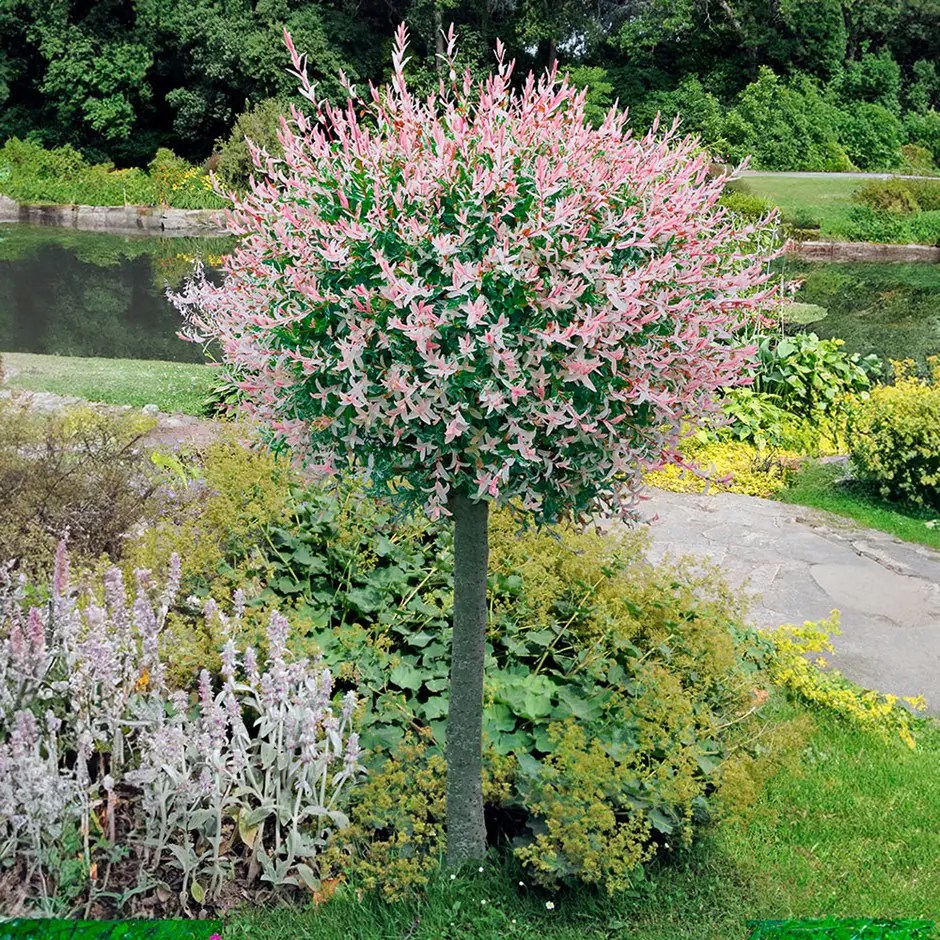
The Flamingo Tree, also known as Salix integra ‘Hakuro-nishiki’, is a popular ornamental willow prized for its pink, white, and green variegated foliage. While generally low-maintenance, it can face a few issues in UK gardens. Here’s a detailed FAQ to help you diagnose and treat common problems.
❓ Why are the leaves on my Flamingo Tree turning brown or crispy?
Answer:
Brown, crispy leaves usually indicate drought stress, excessive sun, or wind scorch. Flamingo Trees prefer moist, well-drained soil and benefit from shelter from strong winds. Check the soil moisture and mulch around the base to conserve water.
❓ My Flamingo Tree’s leaves are curling or deformed—what’s causing it?
Answer:
This is often a sign of aphid infestation. These tiny pests suck sap from new growth, causing curling or distortion. Check the undersides of leaves for greenfly or blackfly and treat with insecticidal soap or a strong jet of water.
❓ What causes black or tar-like spots on the leaves?
Answer:
This could be Willow Scab, a fungal disease that thrives in humid conditions. It causes black blotches and can lead to dieback. Prune away infected shoots and improve air circulation. Avoid overhead watering and dispose of fallen leaves.
❓ Why is my Flamingo Tree losing its leaves early?
Answer:
Early leaf drop can result from drought, fungal disease, or root stress (e.g., waterlogging or compacted soil). Ensure consistent watering, especially during dry spells, and check for drainage issues.
❓ My Flamingo Tree looks sparse and leggy—what should I do?
Answer:
Legginess usually means the plant needs pruning. Flamingo Trees benefit from annual hard pruning in late winter or early spring to encourage bushy growth and vibrant new foliage. Don’t be afraid to cut back hard—they respond well.
❓ The tips of branches are dying—what’s wrong?
Answer:
This may be due to dieback from fungal infections like willow blight (a combination of willow scab and black canker). Prune affected areas back to healthy wood, disinfect tools, and monitor for further signs.
❓ Why are the colourful leaves fading to green?
Answer:
This is normal as the season progresses. The variegated pink and white foliage is most vivid in spring and early summer. As summer wears on, the leaves naturally fade to a more subdued green.
❓ Can I grow a Flamingo Tree in a pot?
Answer:
Yes, but it needs a large container with good drainage and regular watering. Potted trees dry out faster, so monitor moisture closely during warm weather. Annual root pruning and re-potting every 2–3 years are recommended.
❓ My Flamingo Tree is weeping or leaning—what should I do?
Answer:
Flamingo Trees are often grafted standards, and the top-heavy growth can become unbalanced. Use a sturdy stake to support the trunk. Prune to maintain shape and reduce strain on the graft union.
❓ Is my Flamingo Tree dead if it has no leaves in spring?
Answer:
Not necessarily. These trees can leaf out later than others. Scratch a small section of bark with your fingernail—if it’s green underneath, it’s alive. If it’s brown and dry, that part may be dead and should be pruned.
❓ How do I prevent common pests and diseases?
Answer:
- Location: Plant in a sunny, airy spot with good drainage.
- Watering: Keep soil moist but not soggy.
- Pruning: Remove dead or diseased wood annually.
- Mulching: Helps retain moisture and suppress weeds.
- Monitoring: Regularly check for pests like aphids, caterpillars, and fungal spots.
For more expert plant care guides and troubleshooting tips, visit Garden-Review.co.uk – your trusted companion for healthier gardens.
Want more insights into the best tools for your garden or home? Stick with Garden-Review for the latest product reviews, buying guides, and expert recommendations.
One response to “Flamingo Tree (Salix integra ‘Hakuro-nishiki’) – Common Problems & FAQs”
-

[…] Read more about Flamingo Tree (Salix integra ‘Hakuro-nishiki’) – Common Problems & FAQs […]
LikeLike
Read more from our expert at Garden-Review >




 Garden Review UK
Leave a reply to How to Care for a Flamingo Tree (Salix integra ‘Hakuro-nishiki’) – Garden Review UK Cancel reply