

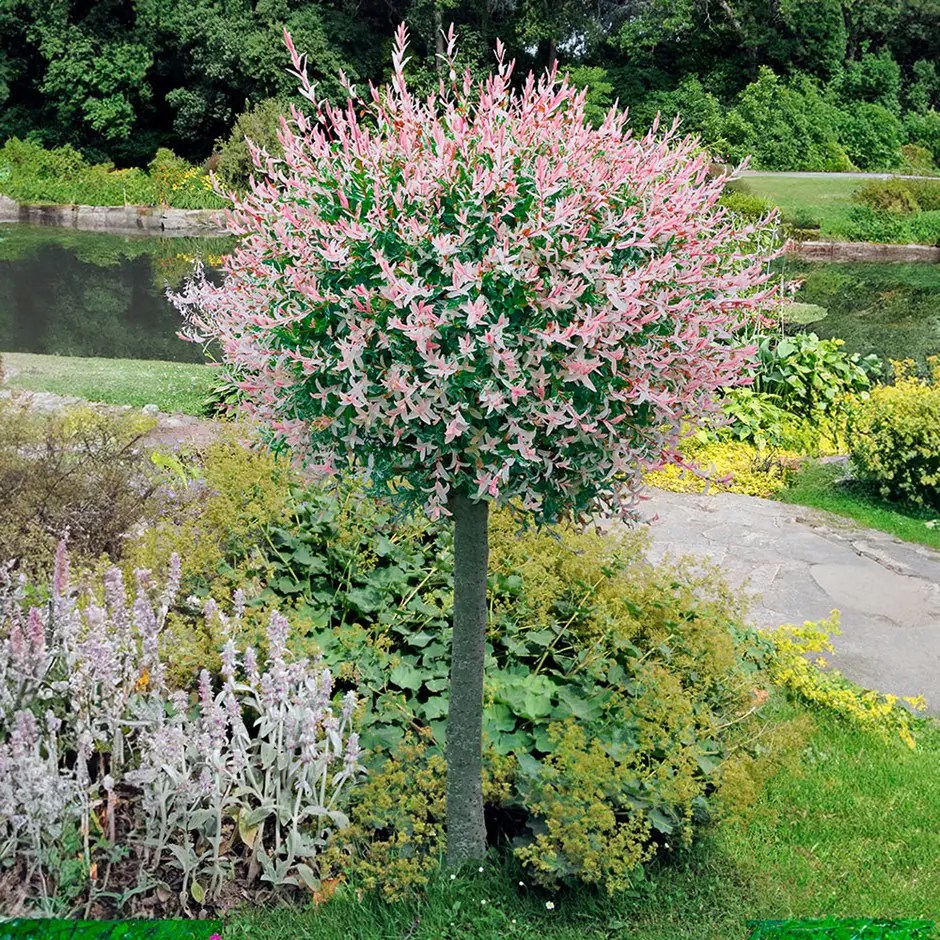
The Flamingo Tree—also known by its botanical name Salix integra ‘Hakuro-nishiki’—is a stunning ornamental willow prized for its pastel-pink, white, and green foliage. With its distinctive variegated leaves and graceful form, this tree brings soft colour and structure to gardens from spring through autumn. Whether you’re growing a standard (lollipop-style) tree or a compact potted version, proper care will keep your Flamingo Tree looking its best year-round.
In this comprehensive guide, we’ll cover everything you need to know—from planting and pruning to seasonal maintenance and troubleshooting common issues.

Overview: Why Choose a Flamingo Tree?
Interest: Spring catkins + striking foliage through summer
Botanical name: Salix integra ‘Hakuro-nishiki’
Common names: Flamingo Tree, Dappled Willow, Japanese Willow
Type: Deciduous shrub/tree
RHS Award of Garden Merit: ✅ Yes
Size: Up to 2–3m tall when mature (standard form); dwarf versions available
Foliage: Pink in spring, maturing to cream and green
Where to Plant to your flamingo tree?
Location is key to helping your Flamingo Tree thrive:
Positioning: Suitable for borders, patio pots, or small gardens. The standard variety makes an excellent specimen tree.
Sunlight: Full sun or partial shade. More sunlight encourages brighter pink tones in new growth.
Soil: Moist, fertile, and well-draining soil is best. Avoid chalky or very dry conditions.
Planting Tips for Flamingo Trees
Timing: Best planted in early spring or autumn.
Spacing: Allow enough room for future growth (at least 1m from other plants or structures).
Planting depth: Dig a hole twice as wide as the root ball. Plant at the same depth as it was in the pot.
Water well after planting and apply mulch to retain moisture.
Watering & Feeding your Flamingo Tree
Watering: These trees like consistent moisture. Water well during dry periods—especially when grown in pots.
Feeding: Apply a balanced slow-release fertiliser in spring to encourage healthy foliage.
Mulching: Add organic mulch around the base (but not against the stem) to improve soil quality and moisture retention.
Flamingo Tree Pruning Guide
Pruning not only shapes the tree but stimulates fresh pink foliage. Here’s how to do it:
- When to prune: Late winter to early spring (February–March) before new growth begins.
- What to remove:
- Dead or damaged wood
- Overgrown or leggy stems
- Branches crossing or growing inwards
- Hard pruning: Every few years, a more drastic cut-back can rejuvenate the tree and enhance colour.
✳️ Top tip: The brighter the new growth, the pinker the foliage—so don’t be afraid to prune!
With stock expected to fly off the shelves, head to your local branch of The Range or visit their website to snap up this seasonal gem while it lasts.
Growing Flamingo Trees in Pots
Flamingo Trees do well in containers as long as you:
- Use a large pot with good drainage holes.
- Choose peat-free compost enriched with organic matter.
- Water frequently—potted plants dry out faster than those in the ground.
- Repot every 2–3 years to refresh the soil and prevent root-binding.
Winter Care
The Flamingo Tree is hardy in the UK, but young or potted trees benefit from a little protection:
- Mulch around the base to insulate roots.
- For potted trees, move to a sheltered spot or wrap pots in fleece or bubble wrap during frosts.
Common Flamingo Tree Problems & Solutions
| Problem | Cause | Fix |
|---|---|---|
| Yellowing leaves | Overwatering or poor drainage | Improve soil, reduce watering |
| Sparse growth | Lack of pruning or poor light | Prune back in spring, reposition for more sun |
| Aphids or caterpillars | Pests feeding on new growth | Use insecticidal soap or hose off with water |
| Browning tips | Dry soil or wind scorch | Water regularly and position away from strong winds |
Companion Planting Ideas
The soft tones of the Flamingo Tree pair beautifully with:
- Lavender – for a fragrant and drought-tolerant contrast
- Hostas – beneath standard trees for foliage interest
- Heuchera – to echo and enhance the pastel colour palette
- Spring bulbs – like tulips or crocus for seasonal layering
Whether you’re a seasoned gardener or just starting out, the Flamingo Tree offers year-round charm with minimal fuss. Its colourful, ever-changing foliage and neat, upright habit make it a reliable feature plant in any setting.
With the right care—especially attention to pruning and watering—your Salix integra ‘Hakuro-nishiki’ will reward you with years of garden beauty.
Read more about Flamingo Tree (Salix integra ‘Hakuro-nishiki’) – Common Problems & FAQs
Want more insights into the best tools for your garden or home? Stick with Garden-Review for the latest product reviews, buying guides, and expert recommendations.
One response to “How to Care for a Flamingo Tree (Salix integra ‘Hakuro-nishiki’)”
-

[…] Read our guide on How to Care for a Flamingo Tree (Salix integra ‘Hakuro-nishiki’ […]
LikeLike
Read more from our expert at Garden-Review >




 Garden Review UK
Leave a comment