
Growing Annual Herbs: A Beginner’s Guide for UK Gardeners
Master the art of growing annual herbs in the UK. From sowing basil to harvesting coriander, follow our expert guide for a bountiful kitchen garden.
Key takeaways
- There is nothing quite like the scent of fresh basil on a warm July evening or the zing of freshly chopped coriander in a summer salad.
- Because they only have one year to grow, flower, and set seed, they put an immense amount of energy into their foliage.
- For the UK, 'Sweet Genovese' is the gold standard for pesto.
- Sowing too early leads to leggy, weak plants due to low light levels, while sowing too late means you miss the peak of the summer sun.
- The best approach is to grow in containers or raised beds using a high-quality peat-free multi-purpose compost mixed with a handful of horticultural grit to improve drainage.
Introduction to Annual Herbs in the UK Garden
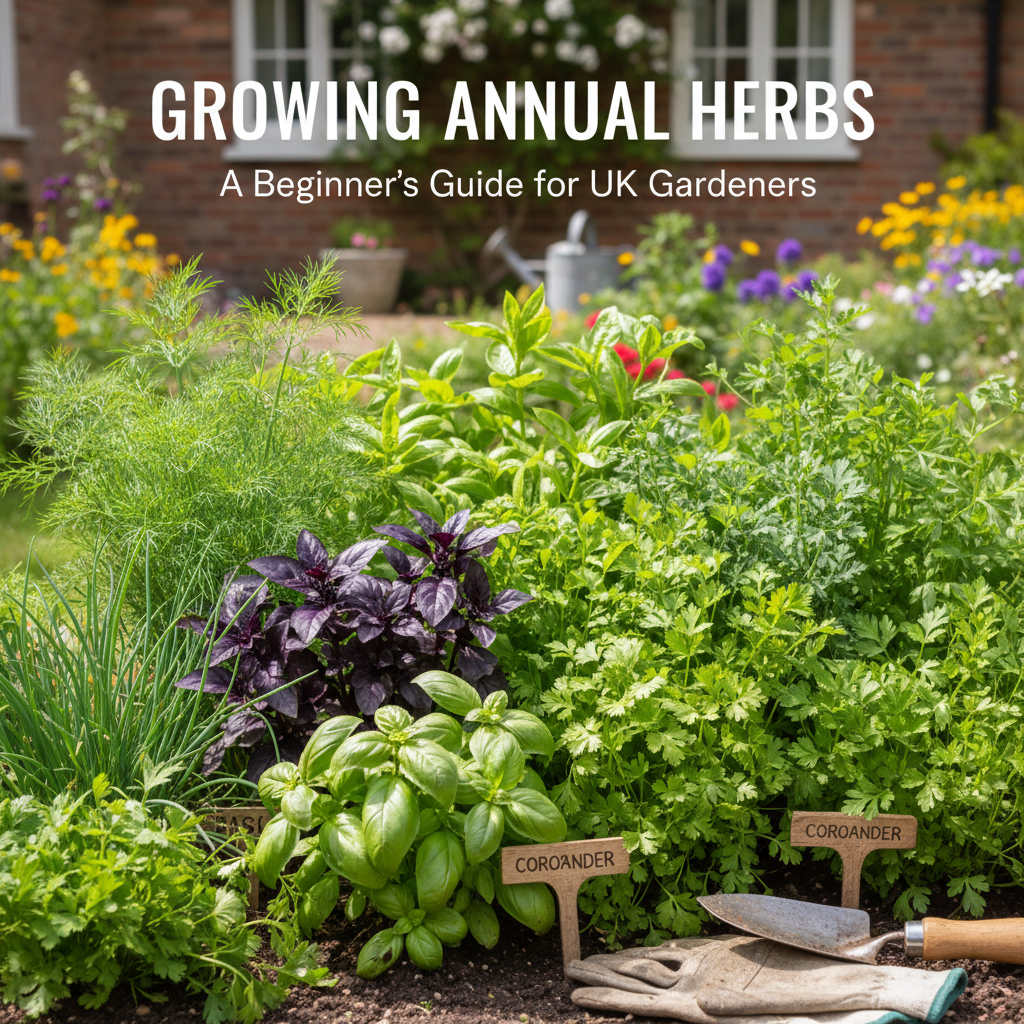
There is nothing quite like the scent of fresh basil on a warm July evening or the zing of freshly chopped coriander in a summer salad. For the UK gardener, annual herbs – those that complete their lifecycle in a single growing season – are some of the most rewarding plants to grow. Unlike hardy perennials like rosemary or thyme, annual herbs provide high-intensity flavour and rapid growth, making them perfect for pots on a windowsill, raised beds, or tucked into the borders of a traditional cottage garden.
In this comprehensive guide, we will explore how to successfully grow the 'Big Four' British annual herbs: Basil, Coriander, Dill, and Parsley (which, while technically biennial, is best treated as an annual for the finest flavour). We will look at the specific challenges of the UK climate, from our unpredictable spring frosts to the damp humidity of late summer.
Why Grow Annual Herbs?
Annual herbs are the workhorses of the culinary garden. Because they only have one year to grow, flower, and set seed, they put an immense amount of energy into their foliage. For the cook, this means tender leaves and potent essential oils. Furthermore, growing your own is far more sustainable and cost-effective than buying those plastic-wrapped living pots from the supermarket, which are often forced in greenhouses and suelenly collapse once brought home.
Choosing Your Varieties: Best for the UK Climate
Basil (Ocimum basilicum)
Basil loves heat and hates wet feet. For the UK, 'Sweet Genovese' is the gold standard for pesto. However, if you are growing on a breezy windowsill, try 'Greek Basil'; it forms a tidy, compact globe that is far more resilient. For something different, 'Crimson King' provides a stunning deep purple foliage that looks as good in a flower border as it does in a salad.
Coriander (Coriandrum sativum)
The biggest complaint with coriander in the UK is that it 'bolts' (goes to seed) too quickly. Look for slow-bolting varieties such as 'Confetti' or 'Cruiser'. These have been bred to produce more leaf and less flower spike in our variable day lengths.
Dill (Anethum graveolens)
Dill is a tall, feathery delight. 'Mammoth' is excellent if you want to harvest seeds for pickling, but for the best leaf production, choose 'Hera', which stays bushy for longer.
Flat-leaf Parsley (Petroselinum crispum f. neapolitanum)
While curly parsley is a nostalgic garnish, 'French Flat Leaf' or 'Gigante di Napoli' offers superior flavour and texture for cooking. It is much hardier than basil and can often survive a mild UK winter if protected with a cloche.
The UK Sowing Calendar: Getting the Timing Right
Timing is everything when gardening in the UK. Sowing too early leads to leggy, weak plants due to low light levels, while sowing too late means you miss the peak of the summer sun.
- March - April: Start seeds indoors on a sunny windowsill or in a heated greenhouse. This is ideal for Parsley and Dill.
- May: The 'Golden Month'. After the risk of frost has passed (usually mid-to-late May in the South, early June in the North), you can sow Coriander and Dill directly into the ground.
- June: Best time for Basil to go outside. Basil is incredibly frost-sensitive; it will turn black and die if the temperature drops below 10°C.
- July - August: Successional sowing. Sow more Coriander and Parsley now to ensure a fresh harvest through to autumn.
Step-by-Step: From Seed to Harvest
1. Preparing the Soil
Annual herbs require free-draining soil. If your garden has heavy clay, herbs will likely rot. The best approach is to grow in containers or raised beds using a high-quality peat-free multi-purpose compost mixed with a handful of horticultural grit to improve drainage.
2. Sowing Seeds
Most annual herbs have small seeds. Sow them thinly on the surface of the compost and cover with a very fine layer of vermiculite or sieved soil. For Coriander, it is often better to sow 'multi-seed' cells—dropping 3-5 seeds into a single small pot—as it dislikes root disturbance.
3. Watering Needs
In the UK, the rule of thumb is to water in the morning. This allows the foliage to dry out before the cool evening temperatures arrive, reducing the risk of Grey Mould (Botrytis) and Downy Mildew, which are common in our humid climate.
4. Feeding
Annual herbs don't need much feeding if the compost is good. However, a liquid seaweed feed every two weeks during July and August will help the plants sustain their leafy growth after multiple harvests.
Expert Tips for Common Challenges
The 'Pinch-Out' Technique
To prevent your basil from becoming a single tall stem, you must 'pinch out' the tips. Once the plant has three sets of true leaves, snip off the top set just above the next leaf node. This encourages the plant to branch out, doubling your yield and creating a bushier, healthier specimen.
Managing the British Summer
If we have a particularly wet summer, move your pots under the cover of a porch or a cold frame. Basil, in particular, will stop growing if it gets too soggy. Conversely, in a heatwave, Coriander will bolt instantly if the soil dries out. Keeping the roots cool and moist is the secret to prolonged coriander harvests.
Dealing with Pests
- Slugs and Snails: They love young parsley and marjoram. Use beer traps or copper tape around pots.
- Aphids: Greenfly frequently attack the tender tips of dill. A sharp blast of water from a spray bottle is usually enough to dislodge them without needing chemicals.
Harvesting and Storage
Always harvest herbs from the top down. This encourages the plant to keep producing new growth from the base.
- Basil: Pick individual leaves or whole stems. Never store basil in the fridge; it will turn black. Keep it in a glass of water on the counter.
- Coriander and Dill: These are best used fresh. If you have a glut, chop them and freeze them in ice cube trays with a little water or olive oil.
- Parsley: Can be harvested heavily. It dries poorly but freezes excellently.
Companion Planting with Annual Herbs
In a UK garden, annual herbs are more than just food; they are vital for biodiversity.
- Dill and Parsley: If you allow a few plants to go to flower, their umbrella-like blooms (umbels) attract hoverflies and predatory wasps, which will eat the aphids on your roses and vegetables.
- Basil: Traditionally planted next to tomatoes. While the 'flavour-sharing' theory is debated, they both enjoy the same sun-drenched, sheltered conditions, making them perfect bedfellows.
Growing annual herbs in the UK requires a little bit of patience and an eye on the weather forecast, but the rewards are incomparable. By selecting the right varieties like 'Genovese' basil and 'Cruiser' coriander, and by timing your sowing to avoid the late spring frosts, you can enjoy a kitchen garden that is both beautiful and bountiful. Whether you have a sprawling allotment or a small balcony in the city, annual herbs are the easiest way to bring a taste of the world into your British home. Start small, sow often, and never settle for dried supermarket herbs again.
For more UK-specific gardening advice, check out our guides on 'Growing Perennial Herbs' and 'Protecting Your Garden from Frost'.
Tags
Comments
Join the conversation
Create a free account to leave comments, share photos, and connect with other gardeners.
Related Articles
How to Grow Perfect, Straight Carrots in UK Soils
Master the art of growing crunchy, straight carrots in your UK garden. From avoiding carrot fly to soil prep, here is everything you need for success.
Year-Round Salad Leaves: A Guide for UK Gardeners
Discover how to grow fresh, organic salad leaves in your UK garden all year round. Expert tips on varieties, sowing schedules, and winter protection.
How to Grow Succulent Strawberries: The Ultimate UK Guide
Master the art of growing delicious British strawberries. From choosing Royal Horticultural Society-approved varieties to organic pest control and winter care.
Winter Garden Tidying
Winter might seem like a quiet time in the garden, but it's crucial for laying the groundwork for a spectacular spring and summer. This guide provides UK gardeners with actionable advice on essential winter tidying tasks, from preparing your soil to maintaining tools and creating a pest-free environment.
Winter Lawn Care UK: Your Essential Guide to a Resilient Lawn
Ensuring your lawn thrives through the UK's colder months requires specific preparation. This guide from Garden-Review provides essential, actionable advice to safeguard your lawn against winter stresses, from correct autumnal mowing to combating common issues like moss and fungal diseases, guaranteeing a vibrant return in spring.
What to Plant in May: Your UK Garden Guide
May is a pivotal month in the UK gardening calendar, marking the true arrival of warmer weather and the departure of late frosts across much of the nation. This comprehensive guide from Garden-Review will help you get the most out of your garden, detailing exactly what vegetables, herbs, flowers, and fruits you can confidently sow and plant for a bountiful year.