
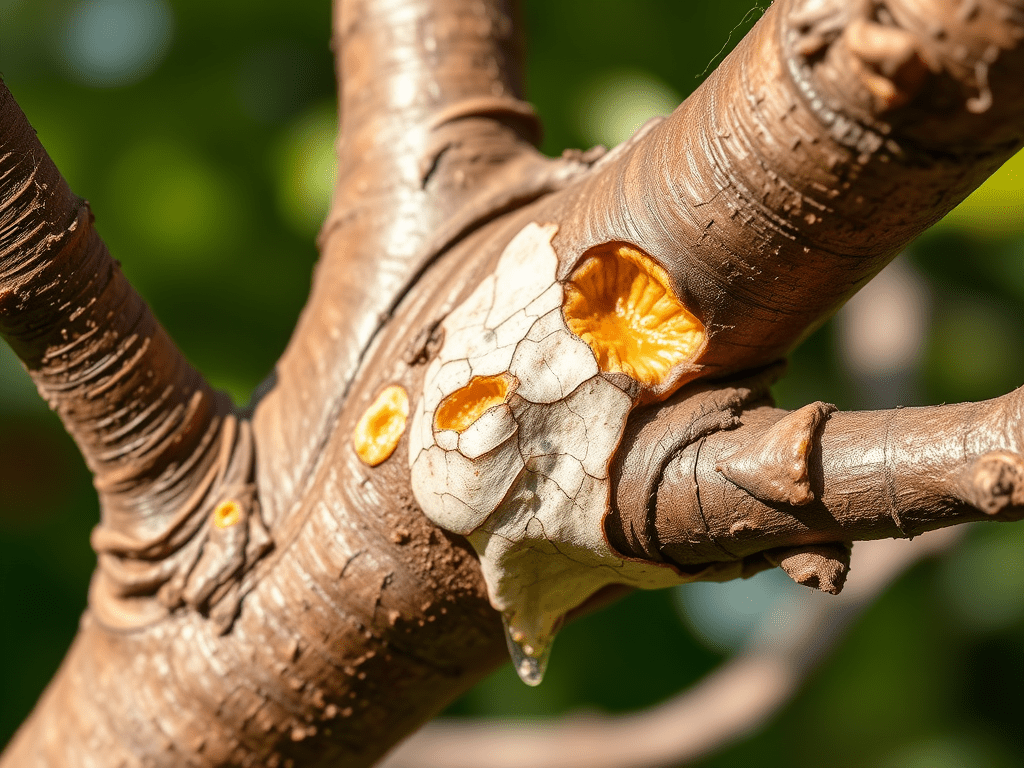

Canker is a common and often destructive plant disease that affects trees, shrubs, and woody plants across gardens, orchards, and landscapes. At Garden-Review, we regularly receive questions from gardeners concerned about sunken lesions on branches, dieback, or oozing sap – all classic signs of canker disease.
This in-depth guide explains what canker disease is, what causes it, how to identify it, and how to prevent and manage it effectively in home gardens and professional settings.
What Is Canker Disease?
Canker is a localized area of dead tissue that forms on stems, branches, trunks, or twigs of plants. It is not a single disease, but a symptom caused by various fungal or bacterial pathogens that infect plants through wounds or weakened tissue.
Once established, cankers disrupt the flow of water and nutrients, leading to branch dieback, reduced vigour, and in severe cases, plant death.
Common Plants Affected by Canker
Canker disease affects a wide range of ornamental and edible plants, including:
- Apple, pear, cherry, plum, and other fruit trees
- Roses
- Beech, maple, willow, and poplar
- Cypress and other conifers
- Tomato, pepper, and other woody-stemmed crops (bacterial canker)
Young, stressed, or recently planted trees are particularly vulnerable.
What Causes Canker Disease?
Canker is caused by pathogens entering the plant through damage. The most common causes include:
1. Fungal Pathogens
Common fungi responsible for canker include:
- Nectria (coral spot canker)
- Cytospora
- Phytophthora
- Botryosphaeria
These fungi thrive in damp conditions and often attack stressed plants.
2. Bacterial Pathogens
Bacterial canker is often caused by:
- Pseudomonas syringae
- Clavibacter michiganensis
Bacterial infections are especially damaging to stone fruit trees and tomatoes.
3. Entry Points for Infection
Pathogens typically enter through:
- Pruning cuts
- Frost cracks
- Sunscald damage
- Insect feeding wounds
- Mechanical damage (tools, lawnmowers, strimmers)
Symptoms of Canker Disease
Symptoms vary depending on the plant and pathogen, but commonly include:
- Sunken, dark, or discoloured patches on bark
- Cracked or peeling bark
- Oozing sap or resin (gummosis)
- Dieback of shoots and branches
- Wilting or yellowing leaves
- Reduced flowering or fruiting
In advanced cases, the canker may girdle the stem or branch, cutting off nutrient flow entirely.
Types of Canker Disease
1. Fungal Canker
- Slow to develop
- Often associated with long-term stress
- May show fruiting bodies on dead bark
2. Bacterial Canker
- Rapid spread in cool, wet conditions
- Common in spring
- Causes blossom blast and shoot dieback
3. Cytospora Canker
- Common on stressed fruit trees
- Produces amber-coloured sap
- Often fatal if unmanaged
How to Diagnose Canker Correctly
Accurate diagnosis is essential. At Garden-Review, we recommend:
- Inspecting bark closely for sunken or dead areas
- Cutting back affected wood to check internal discolouration
- Monitoring seasonal progression
- Consulting a plant pathologist or local extension service for laboratory testing if the infection is severe
How to Treat and Manage Canker Disease
Unfortunately, there is no cure once a canker is established, but it can be managed.
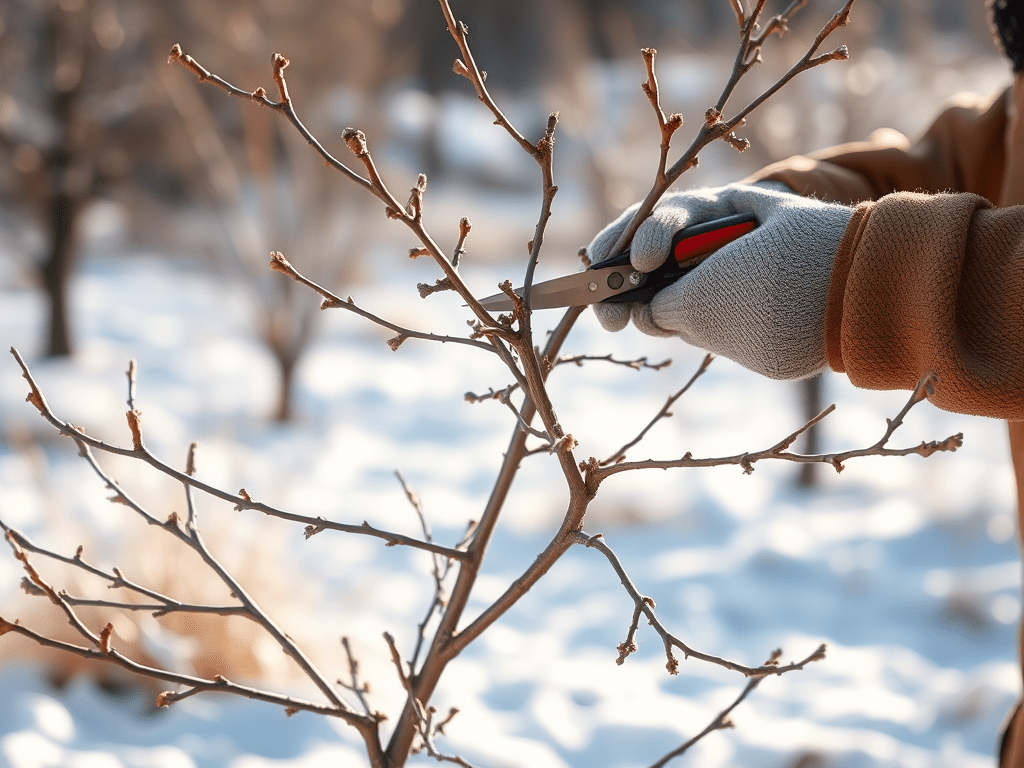
1. Prune Out Infected Areas
- Cut at least 20–30 cm below visible damage
- Prune during dry weather
- Disinfect tools between cuts
2. Improve Plant Health
Healthy plants resist canker far better:
- Water consistently, avoiding waterlogging
- Mulch to retain moisture
- Improve soil structure and drainage
- Avoid excessive nitrogen fertiliser
3. Protect Wounds
- Avoid unnecessary pruning
- Prune at the correct time for each species
- Protect trees from frost and sunscald
4. Fungicides and Bactericides
- Copper-based sprays may help prevent bacterial canker
- Fungicides are generally preventative, not curative
- Always follow label instructions
Preventing Canker Disease in the Garden
Prevention is the most effective strategy:
- Choose disease-resistant varieties
- Plant in suitable locations
- Avoid pruning in wet or freezing conditions
- Control pests that cause wounds
- Maintain overall plant vigour
When Should You Remove a Plant?
If a canker:
- Has girdled the main trunk
- Continues spreading despite pruning
- Severely weakens the plant
…removal may be the safest option to prevent spread to neighbouring plants.
Frequently Asked Questions About Canker Disease
Is canker disease contagious?
Yes. It can spread through tools, rain splash, insects, and infected plant material.
Can a tree recover from canker?
If caught early and managed properly, some trees can survive and continue to grow.
Does pruning paint help?
Modern advice generally discourages wound paints, as they can trap moisture and pathogens.
Canker disease is a serious but manageable problem when identified early. By understanding its causes, improving plant care, and acting quickly, gardeners can significantly reduce its impact.
For more expert gardening advice, disease guides, and plant care tips, explore our latest articles at Garden-Review.
Written by Garden-Review – independent gardening advice you can trust.


 Garden Review UK
Leave a comment