
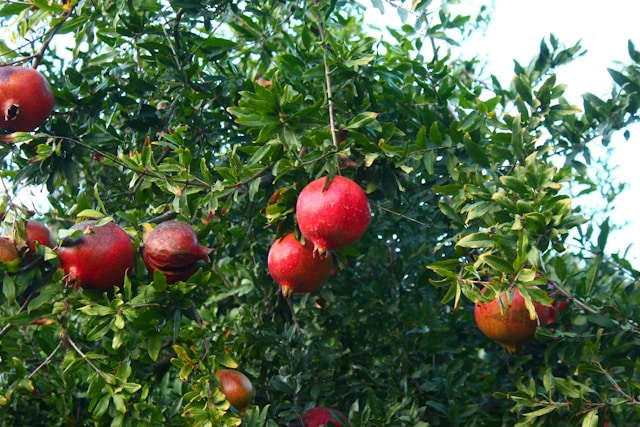

Short answer: Yes – but only just, and not everywhere.
When you think of Pomegranate it’s usually within a warm Middle East and Mediterranean background, the pomegranate (Punica granatum) has quietly joined a growing list of “nearly possible” fruit trees in British gardens. Thanks to warming summers, urban microclimates and greenhouse growing, pomegranates are now surviving – and occasionally fruiting – in parts of the UK.
But growing a pomegranate tree in Britain is less about abundance, and more about adaptation, expectation and climate reality.
Can you grow pomegranate trees in the UK?
Yes. Pomegranate trees can grow in the UK, particularly in southern England and sheltered urban gardens. They are hardy enough to survive winter but require long, hot summers to fruit reliably. Most UK-grown pomegranates are grown as ornamental trees, with fruiting more likely in greenhouses or conservatories.
A Climate Shift Playing Out in Gardens
According to the Met Office, the UK’s average summer temperature has risen by more than 1°C since the 1960s, with extreme heat events becoming more frequent. This warming trend has already changed what gardeners attempt to grow.
“Horticulture is often the first place climate change becomes visible,” says Dr James Wong, botanist and broadcaster. “Plants that once struggled are now merely marginal – and that changes behaviour.”
Pomegranates sit squarely in this category: no longer impossible, but not yet reliable.
Are Pomegranate Trees Hardy in the UK?
Yes – to a point.
- Mature trees tolerate temperatures down to –10°C
- Young plants are more vulnerable to frost
- Cold, wet soil is more damaging than cold air
In practical terms, this means pomegranates can survive UK winters in:
- Southern England
- Coastal regions
- Sheltered city gardens
But survival does not equal success. Flowering and fruiting require consistent summer heat, something Britain still delivers unevenly.
Best Places to Grow Pomegranates in Britain
If you want the best chance of success, positioning matters more than postcode.
Ideal conditions include:
- South- or south-west-facing walls
- Full sun (6–8 hours daily)
- Shelter from cold easterly winds
- Free-draining soil
London gardens, heat-retaining brick walls and urban courtyards routinely outperform exposed rural plots – a reminder that microclimate now matters as much as latitude.
Growing Pomegranates in Pots ( The Sensible Option )
For most UK gardeners, container growing offers the best balance of realism and reward.
Benefits of pot-grown pomegranates:
- Easier winter protection
- Ability to move plants under glass
- Better control of soil moisture and drainage
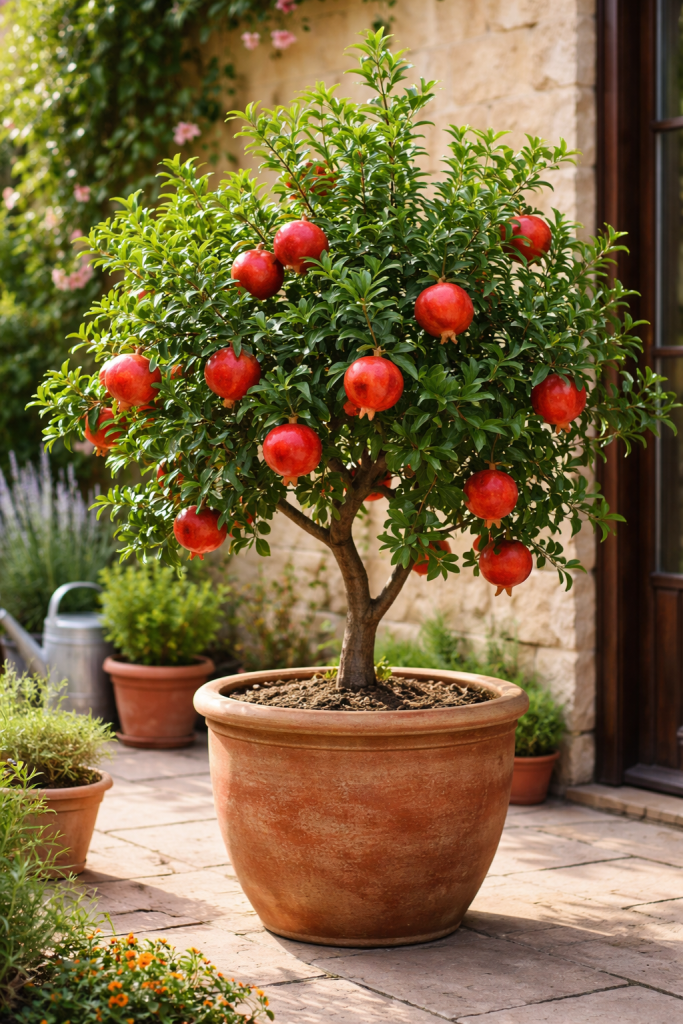
A large terracotta pot, loam-based compost and a sun-trapping patio can dramatically improve results. In colder regions, overwintering in a greenhouse or conservatory is often the difference between flowering and failure.
Will a Pomegranate Tree Fruit in the UK?
This is the question most people are really asking – and the answer is nuanced.
Outdoors:
- Flowers are common in warm summers
- Fruit set is occasional
- Full ripening is rare
Under glass:
- Flowering is reliable
- Fruit can mature fully
- Yields remain modest
Many British gardeners grow pomegranates primarily for their:
- Glossy foliage
- Vivid orange-red flowers
- Architectural form
Any harvest is often viewed as a welcome accident rather than an entitlement.
Best Pomegranate Varieties for UK Conditions
Choosing the right cultivar improves your odds.
Recommended varieties:
- ‘Provence’ – one of the most cold-tolerant
- ‘Russian Red’ – bred for cooler summers
- ‘Wonderful’ – best suited to greenhouse growing
Avoid unnamed seed-grown plants if fruiting matters. Named varieties offer consistency and better climate tolerance.
How Long Do Pomegranates Take to Fruit?
In UK conditions:
- 2–3 years to flower
- 3–5 years for potential fruit
- Longer outdoors than under glass
A lack of fruit does not mean failure – it reflects the limits of Britain’s climate, not your gardening skill.
Low Maintenance, Low Drama
Pomegranates are relatively undemanding.
- Minimal pruning
- Few pests or diseases in the UK
- Good drought tolerance once established
In an era of water restrictions and unpredictable weather, these traits matter.
Opinion: What Pomegranates Say About British Gardening Now
The rise of pomegranates in UK gardens is not really about fruit. It’s about how gardeners respond to change.
As traditional assumptions about what “belongs” in Britain erode, gardeners are experimenting – cautiously – with plants once considered exotic. Pomegranates symbolise that shift: hopeful, restrained, and shaped by climate rather than fashion.
They may never replace apples or pears, but they no longer feel entirely out of place.
FAQs
Can pomegranate trees survive UK winters?
Yes, particularly in sheltered southern locations.
Do pomegranates need a greenhouse in the UK?
For reliable fruiting, yes. For ornamental growth, no.
Can I grow a pomegranate tree from seed in Britain?
You can, but fruiting and quality are unpredictable.
Are pomegranate trees good for small gardens?
Yes – especially when grown in containers.
Growing pomegranate trees in the UK is no longer a novelty, but it remains a calculated experiment. With warming summers, careful positioning and realistic expectations, British gardeners can now grow – and occasionally harvest – one of the world’s oldest fruits.
Just don’t expect the Mediterranean. Expect Britain, gently changing.




 Garden Review UK
Leave a comment