
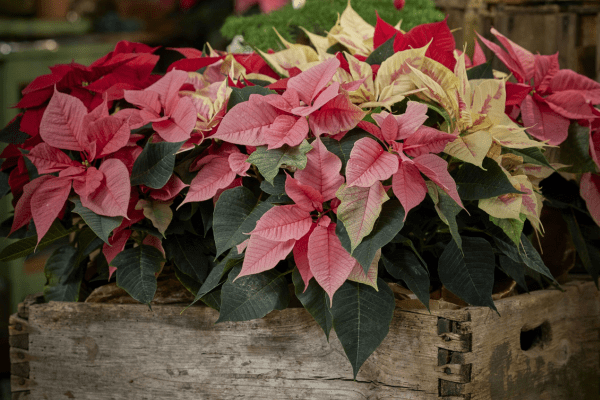

Poinsettias are a Christmas favourite, but keeping them looking vibrant into January can feel like a challenge. The colourful bracts often fade fast, leaves begin to drop, and plants can look stressed after the festive season.
The good news? With just a few smart care techniques, you can keep your poinsettia alive well into the New Year—and even encourage it to thrive long term.
How to Keep a Poinsettia Alive After Christmas: The Essentials
1. Choose a Healthy Plant from the Start
A long-lasting poinsettia starts with choosing the right one:
- Bracts should be firm, bright, and unblemished
- Foliage should look dense and green (no yellow leaves)
- Avoid plants kept near shop doors or cold draughts
- Check for pests like whitefly under the leaves
A stressed plant at purchase will rarely bounce back.
2. Protect Your Poinsettia from the Cold
Poinsettias are tropical plants and extremely sensitive to low temperatures.
- Ensure your plant is wrapped or sleeved at the shop
- Avoid leaving it in a cold car
- Keep it covered from the shop to your front door
Even brief cold exposure can trigger leaf drop within 24–48 hours!
Where to Put a Poinsettia Indoors
3. Choose the Best Spot for Light and Temperature
Poinsettias thrive in:
- Bright, indirect light (near a window but out of direct sun)
- Temperatures of 18–22°C
- Rooms without draughts or sudden cold spots
- Places away from heaters, radiators or fireplaces
They love stability—avoid moving the plant more than necessary.
How to Water a Poinsettia Properly
4. Water Sparingly and Let It Drain
Overwatering is the number one cause of poinsettia decline after Christmas.
- Check soil moisture — water only when the top 2–3cm is dry
- Water thoroughly, then let excess drain away
- Never let the pot sit in water
- Remove decorative foil wraps that trap moisture
Bonus Tip: Increase Humidity
If your winter heating dries the air, place your poinsettia on a tray of damp pebbles, or lightly mist in the morning.
Poinsettia Care After Christmas
5. Start Feeding in January
After the bracts begin to fade (usually early January), start feeding with a balanced liquid fertiliser every 2–3 weeks.
This keeps foliage fresh and supports healthy spring growth.
6. Rotate the Plant for Even Growth
Poinsettias naturally lean toward the light.
Rotate the pot a quarter turn every few days to maintain a neat, upright shape.
How to Keep a Poinsettia Alive Long-Term
7. Prune and Repot in Spring
If you want your poinsettia to survive past winter:
- Cut stems back to 10–15cm in February or March
- Repot in fresh, well-draining compost in late spring
- Move outdoors in summer (in partial shade)
- Bring indoors before temperatures drop in autumn
With the right light-control routine, you can even encourage it to rebloom for next Christmas.
Common Poinsettia Problems (and How to Fix Them)
Leaf Drop
Cause: cold, draughts, or overwatering
Fix: move to a warmer, stable room and water less frequently
Yellow Leaves
Cause: low light or waterlogged soil
Fix: improve drainage and move to a brighter location
Drooping
Cause: underwatering
Fix: water thoroughly and maintain regular checks
FAQ: How to Keep a Poinsettia Alive Through the New Year
Why do poinsettias lose leaves after Christmas?
Usually due to cold exposure or inconsistent watering. Even a brief chill during the journey home can cause delayed leaf drop.
How often should I water my poinsettia?
Typically every 7–10 days, but always check the soil. Only water when the top few centimetres feel dry.
Can poinsettias live year-round?
Yes! With correct light, warmth and pruning, poinsettias can last for years and even rebloom.
Should I mist my poinsettia?
Yes—light morning misting helps improve humidity, especially in centrally heated homes.
Will my poinsettia turn red again next year?
It can, but it requires strict light control in autumn (14 hours of darkness daily). Many gardeners enjoy the challenge!


 Garden Review UK
Leave a comment