
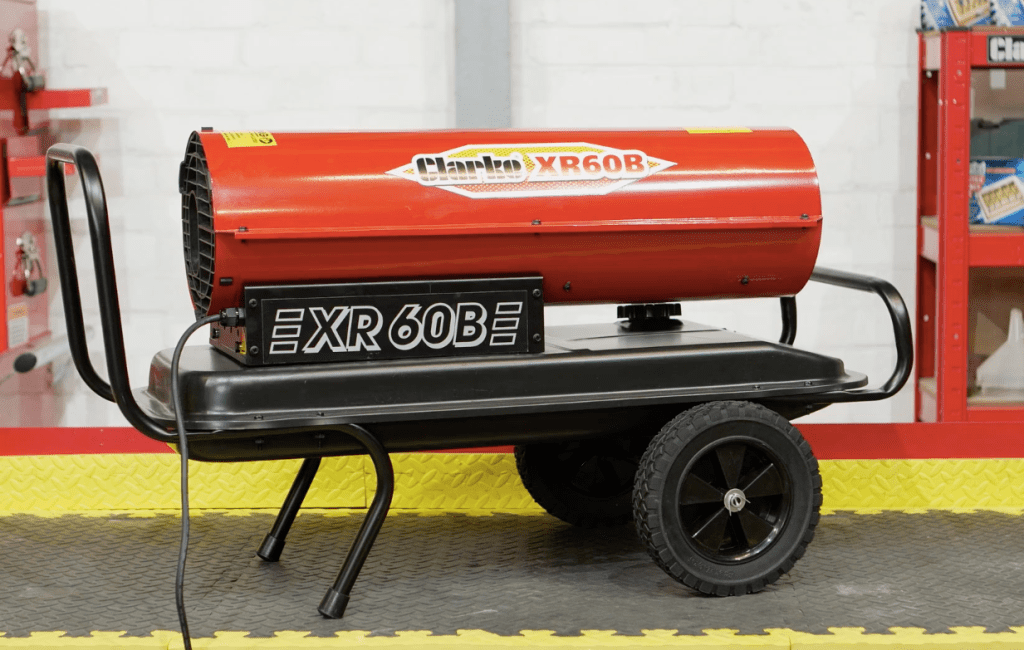

In this Garden-Review guide we look at different Clarke Space Heaters for professional and industrial use.
Industrial and professional environments require reliable, high-output heating solutions that go beyond domestic fan-heaters.
In choosing a space heater, you’ll consider not just the purchase price but fuel/power infrastructure, ventilation or exhaust needs, mobility, maintenance and safety compliance. Clarke offers a broad range of heaters via Machine Mart in multiple technologies: diesel/paraffin forced-air, gas-fired (propane/LPG), electric fan/radiant, and infrared spot heating. This guide helps you select, size, compare, and buy correctly for your professional application.
Before diving into models, the first and most important step is to define the heating application and constraints. For a professional or industrial buyer, the following factors should guide your choice:
| Factor | Why It Matters | Key Questions |
|---|---|---|
| Volume & Heat Load | You must size the heater to match the cubic volume, insulation, heat loss and work patterns (intermittent, continuous) | What is the cubic volume (m³)? What are wall/roof insulation levels? How many air changes per hour? |
| Type of Space & Ventilation | Some heater types require combustion air and exhaust; others are electric/infrared and need no flue | Is the space open or sealed? Is there sufficient ventilation for combustion exhaust? |
| Fuel / Power Availability & Cost | Running cost, fuel logistics, infrastructure (gas line, diesel tank, electrical supply) are critical in industrial environments | Is mains electricity robust enough? Is propane supply accessible? Can you store bulk diesel/kerosene safely? |
| Safety, Emissions & Compliance | Industrial environments often have stricter safety, emissions, and insurance requirements | Are flame failure cut-offs, thermal shutoffs, and exhaust provisions adequate? Will emissions (CO, NOₓ, particulates) be acceptable? |
| Mobility & Deployment Flexibility | You may need to move heaters around or deploy them to temporary worksites | Is the unit portable (wheels/handles), or fixed? How easily can fuel, exhaust or ducting be routed? |
| Controls, Modulation & Efficiency | A heater that cycles or modulates can reduce fuel costs and overshoot temperatures less | Does the unit include thermostatic control, variable output, or staged modes? |
| Maintenance, Support & Spare Parts | In industrial settings, downtime costs are high, so support and ease of servicing matter | Are spare parts, filters and technical support available locally? How easy is servicing combustion chambers, fans, nozzles, etc.? |
Once you have these parameters, you can map them to heater types.
2. Heater Type Comparisons & Clarke Options (via Machine Mart)
Here’s how the principal heater types compare, and which Clarke models (or similar) are offered via Machine Mart. (Note: Machine Mart’s stock changes, so always check for current availability and specifications.)
2.1 Diesel / Paraffin (Forced‐Air) Heaters
These are indirect or direct combustion heaters that draw in air, burn fuel (diesel or kerosene), and blow the heated air into the space. They are often rugged, mobile, and high output.
Advantages:
- High heat output per unit cost of fuel.
- Can heat large volumes relatively quickly.
- Portable units with wheels and handles exist.
- Diesel/kerosene is often easier to store in industrial sites.
Disadvantages / Considerations:
- Requires ventilation/combustion-air intake; in enclosed spaces CO buildup is a hazard.
- Some units require exhaust flues or ducting for combustion byproducts.
- Periodic maintenance of burner, nozzles, pump, filters is required.
- Noise and odor may be issues during start-up or in high output modes.
Clarke diesel/paraffin models (via Machine Mart) include:
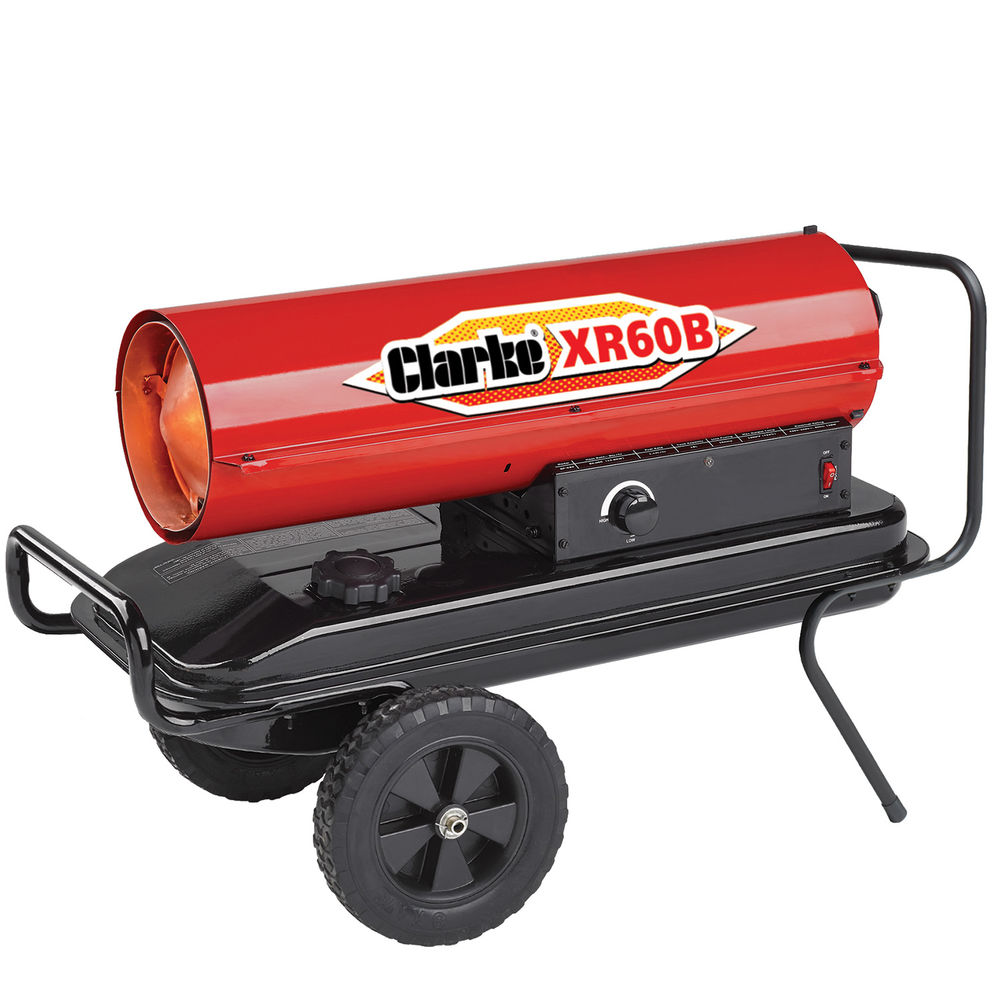
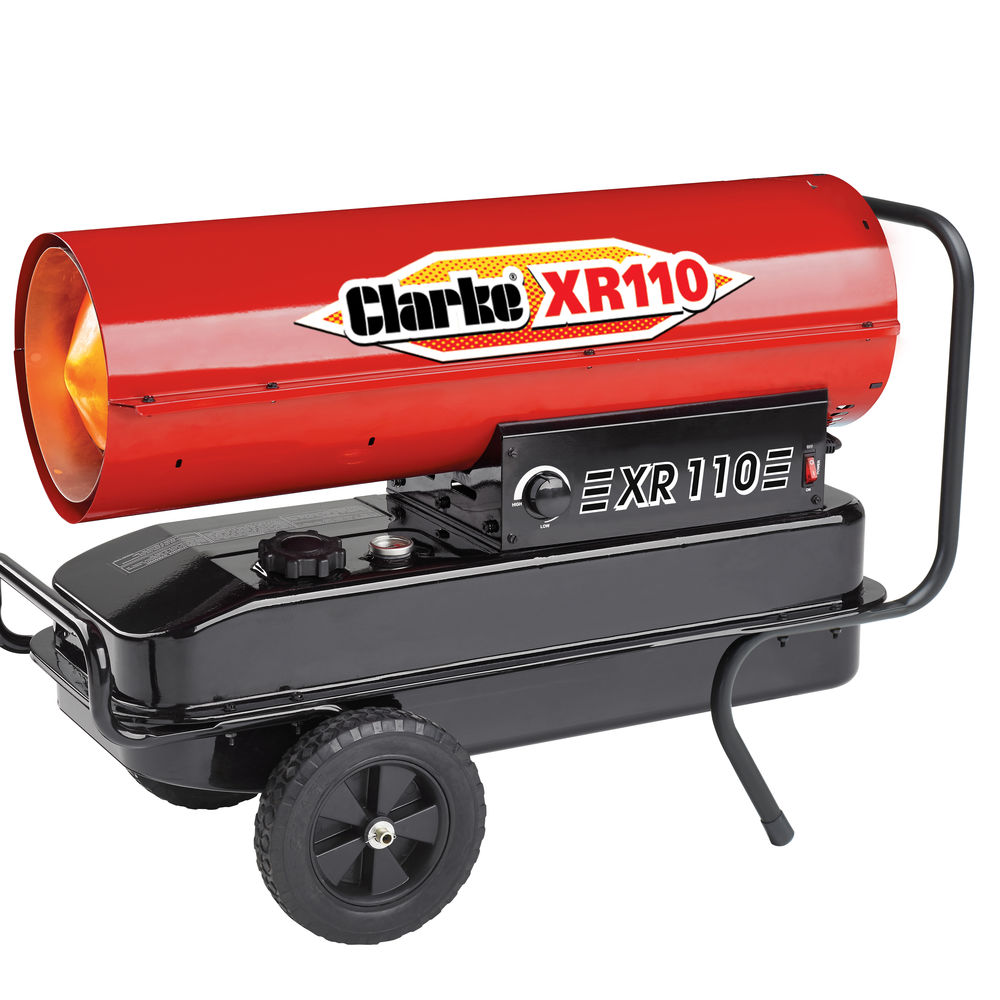
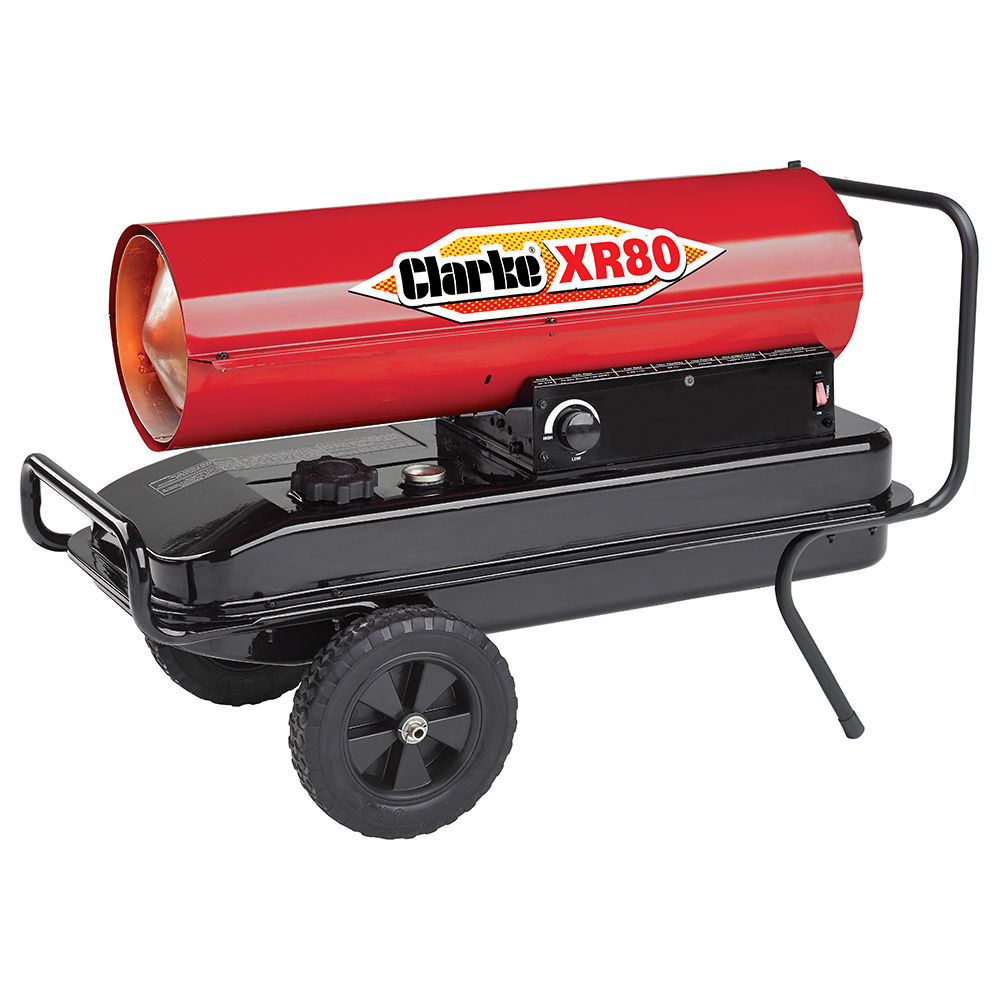
Clarke XR160 Diesel/Paraffin Industrial Space Heater
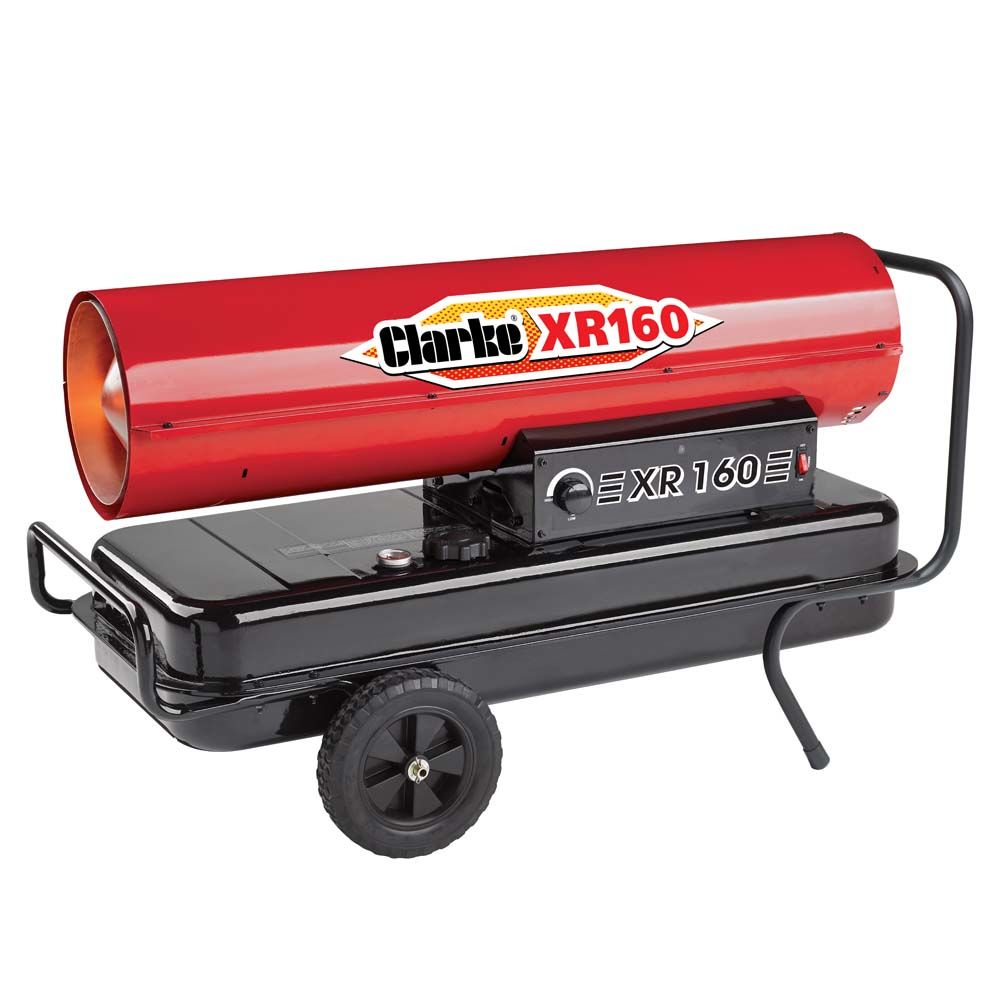
Heat output 160,000 BTU/HR (46.9kW)
Fuel tank capacity 53 Litres – sufficient for approx 13 hours operation.
Stainless steel combustion chamber is highly durable and resistant to corrosion.
High efficiency air and fuel filters. – Automatic flame failure cut out. – Variable heat control with thermostat – heater cycles on/off as heat is required
Dimensions (LxWxH): 1045x528x692mm
Weight: 24.5kg
Clarke XR210 Diesel/Paraffin Industrial Space Heater
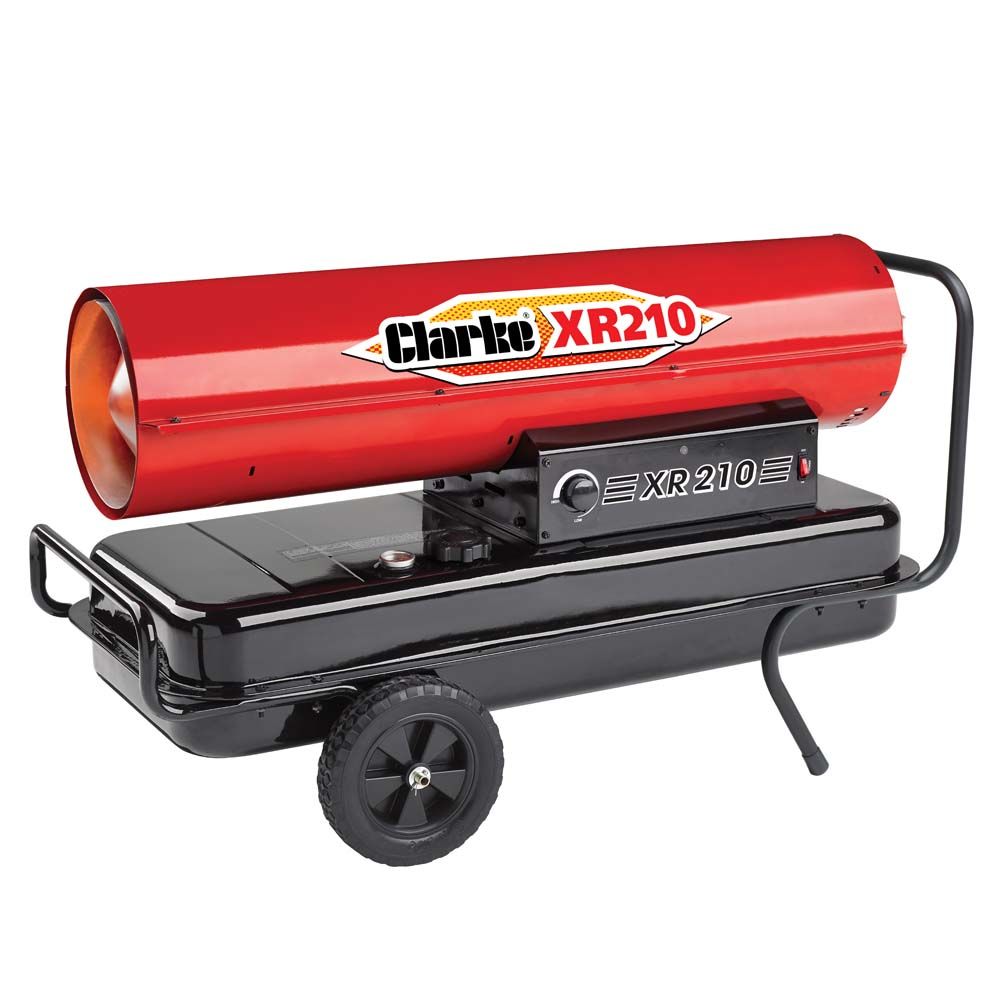
Heat output: 61.5kW (210,000 Btu/hr)
Fuel tank capacity: 53 litres – Approx 13 hours’ continuous operation
Wheels & handle for easy movement
Stainless Steel combustion chamber. High efficiency air & fuel filters. Automatic flame failure cut-out.
Variable heat control with thermostat – heater cycles on/off as heat is required
Dimensions (LxWxH): 1045 x 528 x 692mm
Weight: 24.5kg
Note: Clarke also offers dual‐voltage (110/230 V) versions of certain models (e.g. XR60DV, XR160DV) to support more flexible power deployment.
Selection Tips (Diesel Type):
- Choose a model whose heat output is at least 1.2–1.5× your calculated thermal load to allow for losses and rapid recovery.
- Prefer models with variable output or thermostatic control to avoid constant full-power operation.
- Check fuel tank capacities and run times—larger tanks (50 L+) are beneficial for long shift sites, but add weight.
- Confirm fan airflow (m³/hr) so that heat is distributed adequately across the space.
- Inspect the combustion chamber design (stainless steel, corrosion resistance), flame failure protection, and safety cutoffs.
- Clarify which models require exhaust venting or ducting, or whether they operate “open flue” style.
2.2 Gas-Fired (Propane / LPG) Space Heaters
These heaters burn propane or LPG and blow heated air, used for workshops, sheds, site huts, production bays, etc.
Advantages:
- Clean burning (if well designed) and relatively controlled emissions.
- Propane/LPG can yield good power density.
- Many models are compact and portable.
Considerations / Limitations:
- Requires propane (LPG) cylinders or connection to LPG supply lines.
- Must comply with regulations for gas use and ventilation.
- Fuel cost per kWh sometimes higher than diesel, depending on supply.
- Some units require pilot or ignition, pressure regulation, safety features.
Clarke gas fired models via Machine Mart:
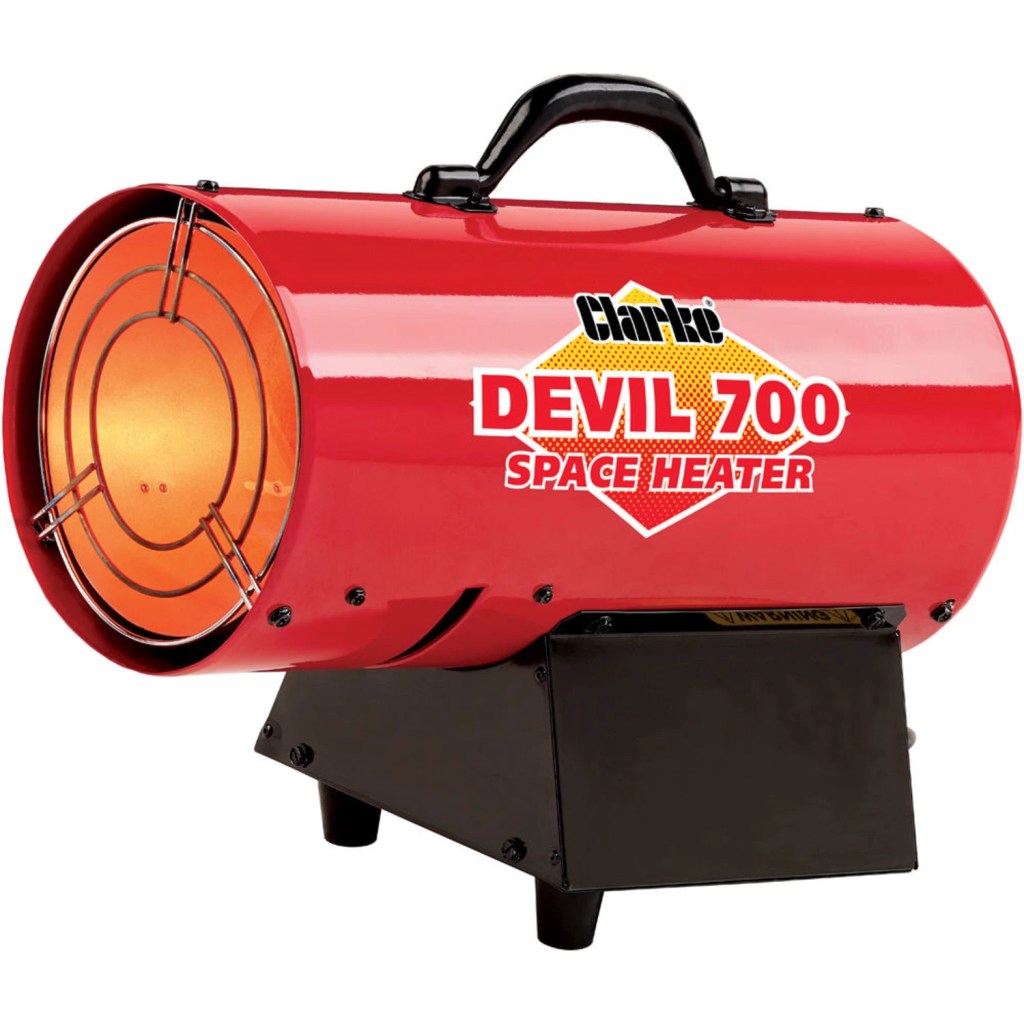
This compact but powerful propane heater delivers low-cost, efficient heat for garages, workshops, warehouses and more. Its variable output is easily adjusted via a simple control, and the lightweight, portable design makes it easy to move around site. An electric ignition ensures quick, reliable starting, and it meets all British and European standards with a full safety cut-out for overheating, flame or power failure. Supplied with handle, regulator and gas hose.
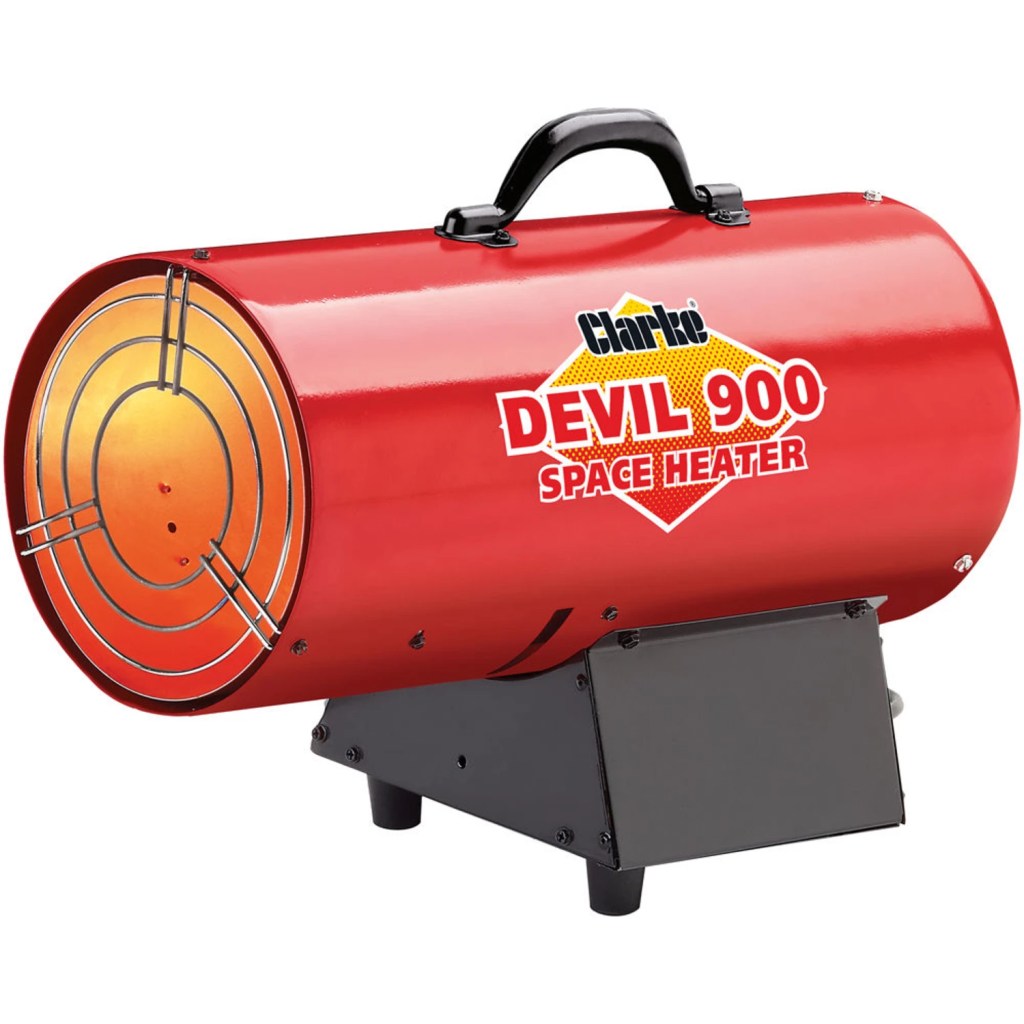
The Devil 900 brings serious heat to any workshop, garage or small industrial space, delivering an impressive 24.9kW output for fast, efficient and affordable warmth. Despite its power, it’s surprisingly lightweight and easy to move, with a built-in carry handle and a stable stand that keeps it steady while in use. Perfect for keeping your workspace comfortably warm through the colder months.
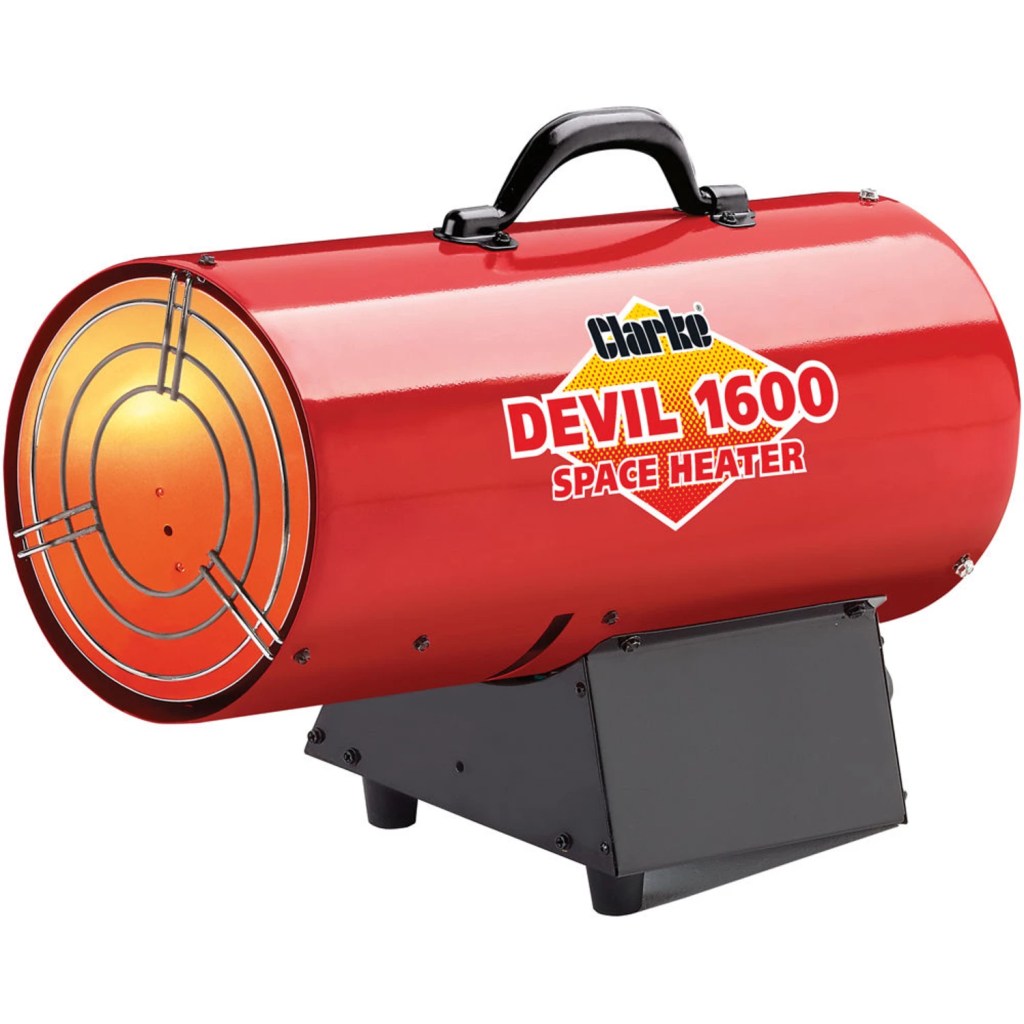
Heat your workshop, industrial unit or garage with the Clarke Devil 1600 Space Heater which has been designed to provide highly efficient and low cost heating, with the lightweight and portable design which easily allows you to move the heater wherever it’s needed.
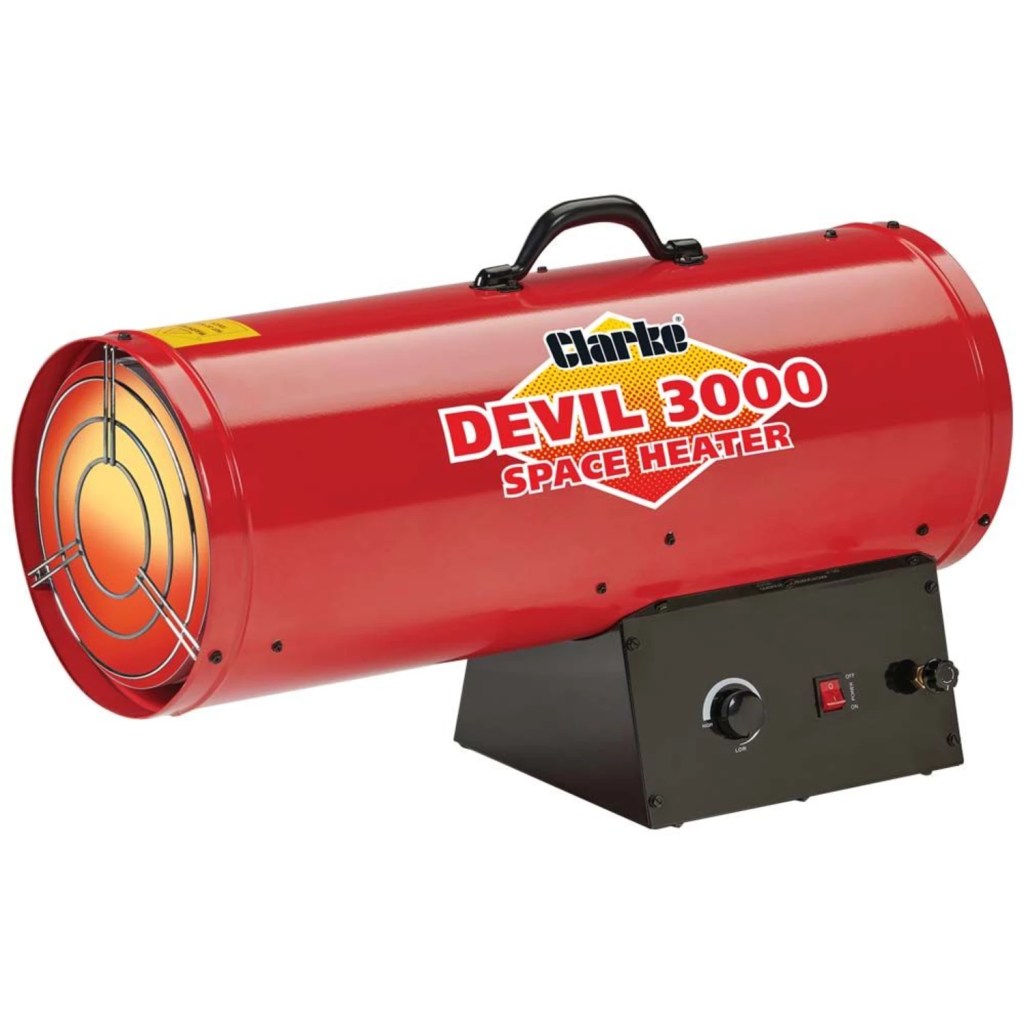
Clarke’s Devil 3000 Space Heater provides a highly efficient and low cost heating solution for industrial places of work such as garages, workshops, warehouses, factories etc. This heater provides a powerful 82kW output and a lightweight design to provide an ideal solution to your heating issues.
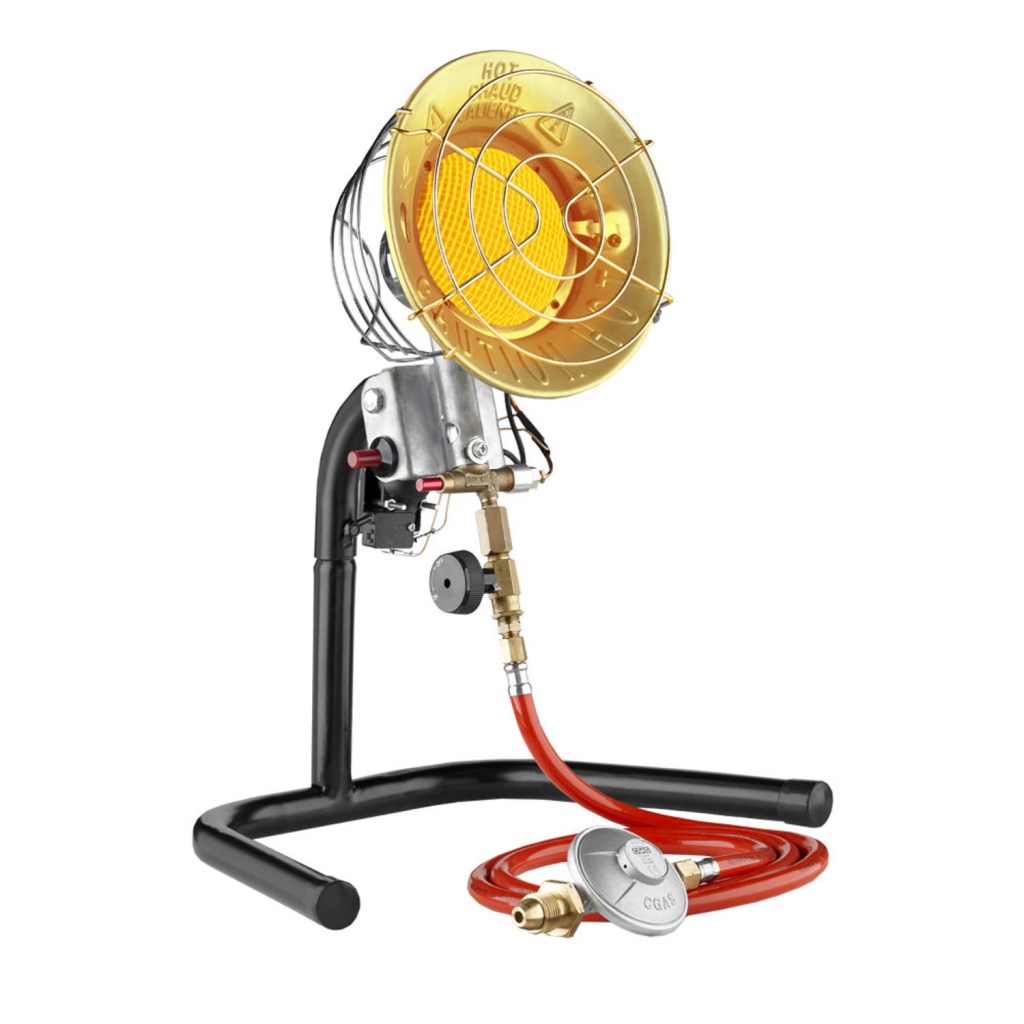
The Clarke GRH15 4.7kW Portable Infrared Gas Heater has been specifically designed to be very compact and lightweight for ease of transportation. Ideal for on-site working and well ventilated outdoor activities such as camping, fishing, hunting etc.
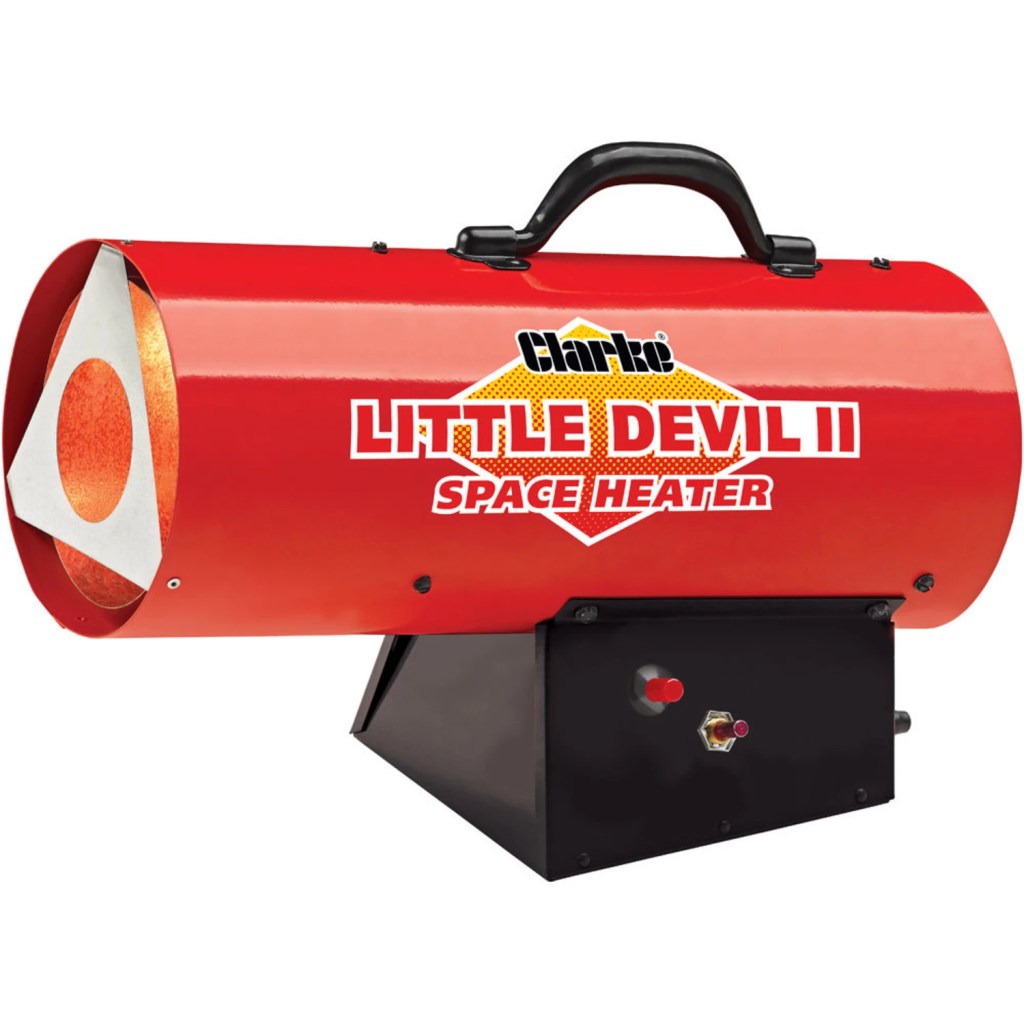
The Clarke Little Devil 2 is a compact propane-fired space heater, ideal for small workshops, sheds, garages and other working areas. The heater is very lightweight and features a handy top mounted handle so it can be carried around easily and used wherever it’s required. Despite the heater’s small size and weight, the Little Devil 2 heater produces an excellent 35,000 Btu per Hour / 10kW heat output, easily enough to warm small areas up to a comfortable temperature quickly and efficiently. It even comes complete with a regulator and heavy duty gas hose, making it even better value.
Selection Tips (Gas Type):
- Match the gas pressure (e.g. 300 mBar) and ensure regulators and hoses are appropriate. Clarke Devil 700 is specified at 300 mBar.
- Confirm gas consumption (kg/h) and compute operational cost relative to diesel or electric.
- Evaluate the variation range (e.g. 8.8–14.6 kW) so you can run at partial loads efficiently.
- Ensure safety cutoffs for flame failure, overheating, and power loss.
- Consider whether you need dual-voltage or electric ignition support.
- Confirm that the heater includes or is compatible with necessary hoses, regulators, and mounting or support gear.
2.3 Quartz / Halogen / Radiant Electric Heaters
These heaters produce heat via electric infrared/quartz elements. They may be used to provide localized “spot heating” without heating all the ambient air.
Advantages:
- Instant heat; no combustion, no exhaust or emissions.
- Good for targeted heating (e.g. workstations, entry points, doors) within larger volumes.
- Simple electrical systems; minimal maintenance.
- Quiet operation compared to forced-air burners.
Considerations / Limitations:
- Electric running cost can be high, especially in large or poorly insulated spaces.
- Cannot replace a high-output forced air heater for bulk heating in many industrial settings.
- Radiant heaters warm surfaces and people, but may not raise ambient air temperature strongly.
I did not find many concrete Clarke quartz/halogen heater models listed on Machine Mart under the Clarke brand currently. However, the “Quartz Halogen Heaters” category exists on their heating/ventilation menu. Machine Mart
If Clarke offers models in that domain, you’d want to check:
- Radiant coverage angle / beam spread (degrees)
- Element wattage and operational voltage
- Mounting method (wall, ceiling, portable stand)
- IP / ingress protection for industrial / dusty environments
2.4 Industrial Electric Fan / Resistive Heaters
These are purely electric units (resistive heating + fan) for general space heating, often used when combustion isn’t possible or desired.
Advantages:
- No combustion, exhaust, or emissions—much simpler to deploy in tight industrial or enclosed spaces.
- Quiet, stable, and low-maintenance.
- Good for smaller volumes, support heating, or tempering.
Considerations / Limitations:
- Electric cost (per kW) is usually higher than fuel-based heating for large loads.
- Electrical supply infrastructure must be robust (multi-kW loads, three-phase options).
- Limited in very large volume spaces unless power supply is generous.
Clarke models in Machine Mart’s stock include:
CLARKE DEVIL 2000PTC-B 2KW CERAMIC FAN HEATER (230V) — compact for small zones.
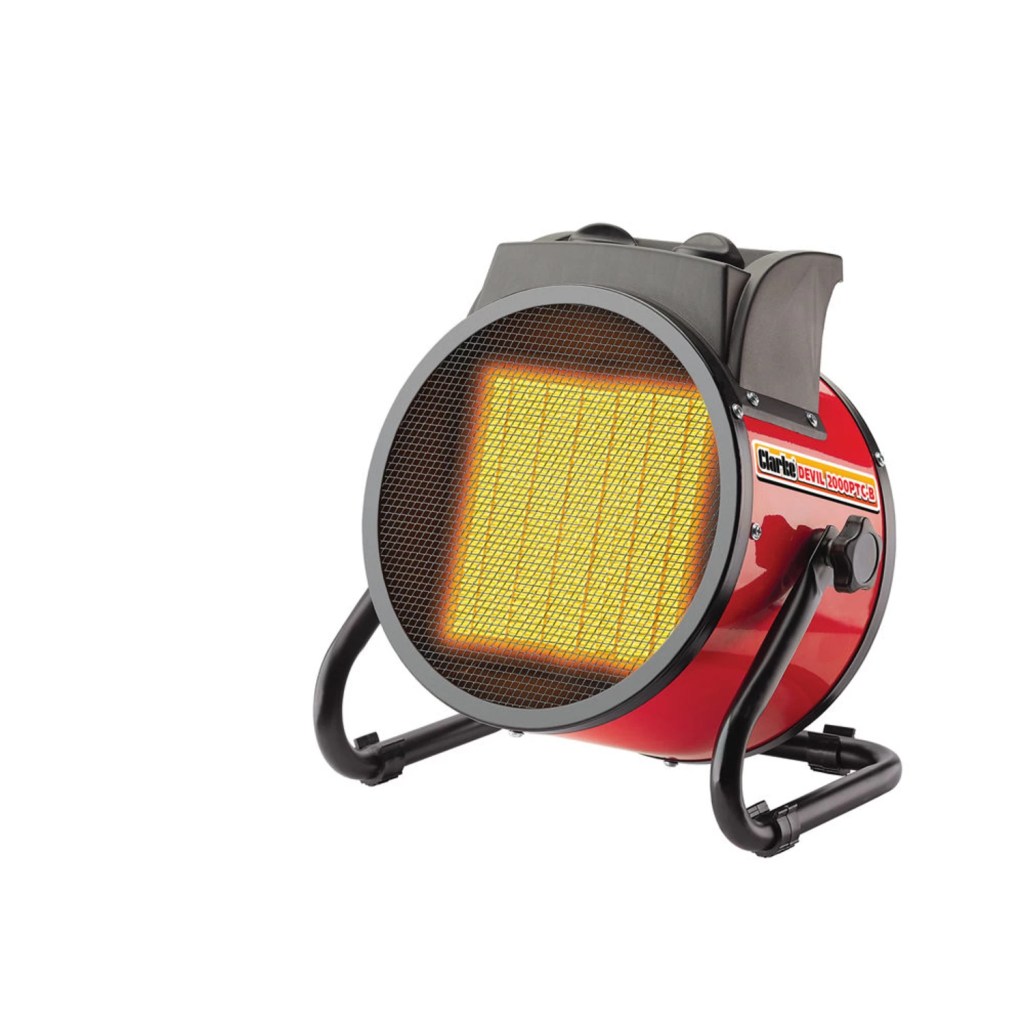
Lightweight, efficient and fairly powerful portable heater – ideal if you want to heat a small workshop or garage quickly, but not intended as a sole heating source for a whole house or poorly insulated space.
Clarke Devil 2850 Electric Fan Heater — Compact and Portable – 2.8 kW.
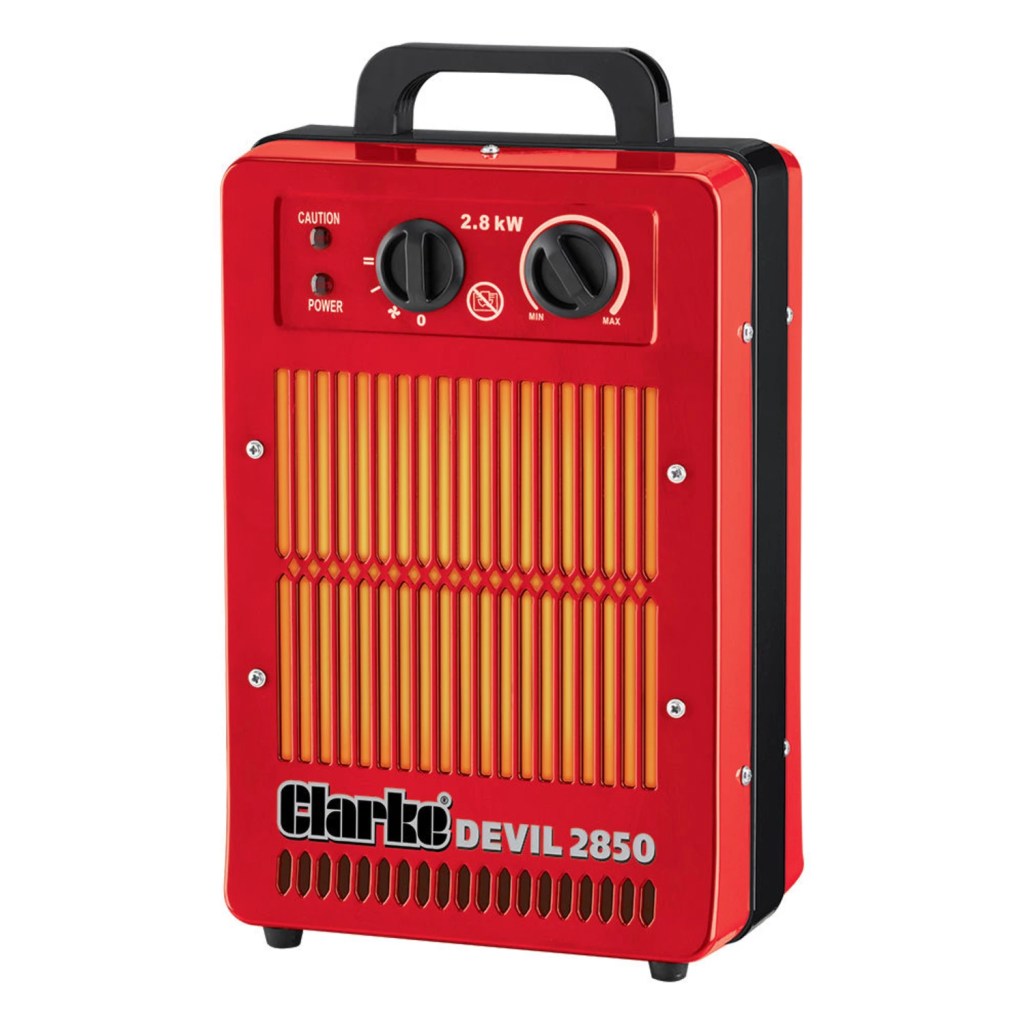
It’s a modest but effective and portable fan heater – good for warming up a garage, workshop or hobby space quickly, but not a substitute for main home heating.
Clarke Devil 5000 PTC Fan Heater — higher output fan heater.
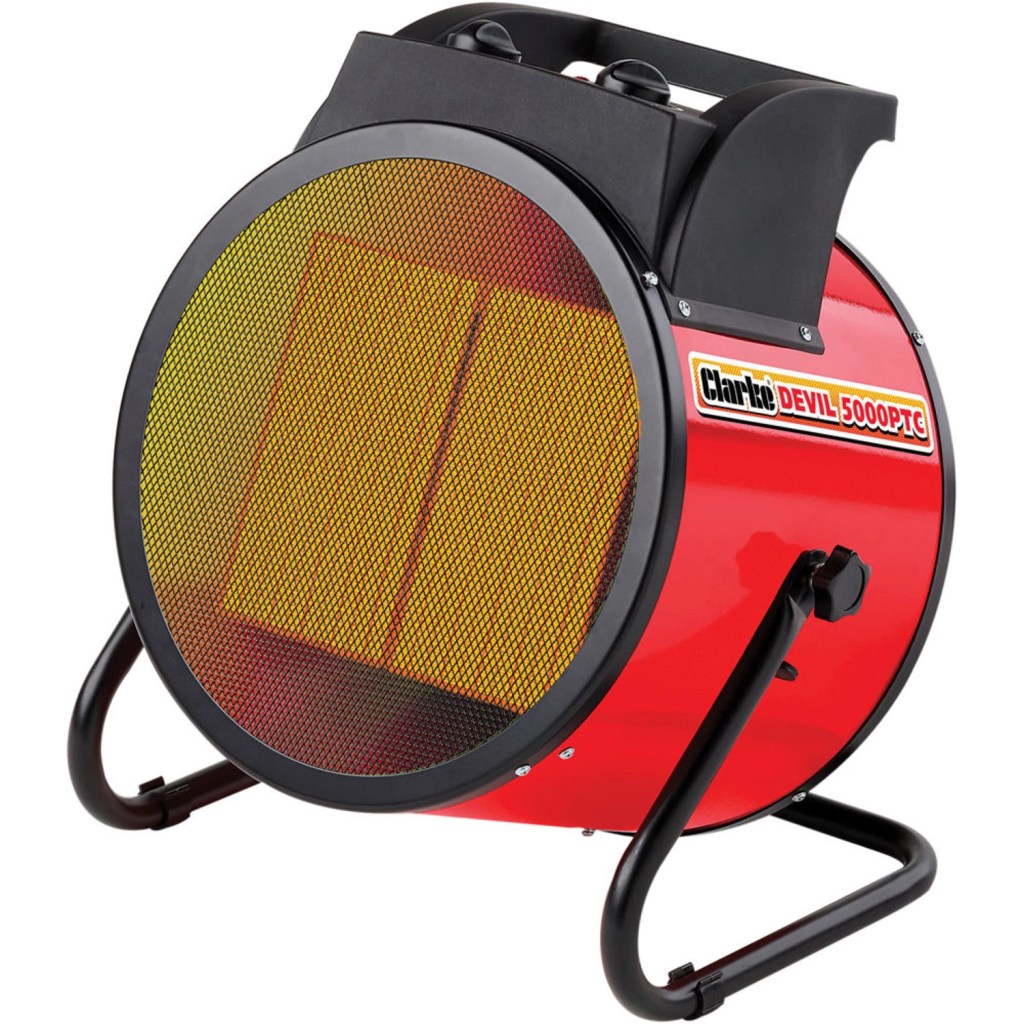
This is a powerful, industrial-grade fan heater, ideal for heating garages, workshops or factory workspaces quickly and efficiently — but due to its 3-phase requirement and design, it’s not really suited to typical domestic use or poorly insulated spaces.
Selection Tips (Electric Type):
- Ensure your facility’s electrical infrastructure can support the unit (voltage, phase, breaker rating, cables).
- For continuous operation, check whether the heater supports thermostatic control or variable output to avoid cycling.
- Check airflow (m³/hr) so that warmed air reaches needed areas.
- Durability: look for rugged steel casing, dust filtration, fan blade accessibility, IP protection in harsh workshops.
3. Sizing & Selection Workflow (Step-by-Step)
Here’s a suggested workflow for a professional buyer:
- Calculate Heat Load / Demand; Workshop Heat Load Formula (Simple)
- Watts needed ≈ Volume (m³) × 30–50 W/m³
- Poor insulation: 50–70 W/m³
- Average workshop: 40–50 W/m³
- Well insulated: 25–30 W/m³
- Once you know the required kW, find a Clarke unit that meets or exceeds the rating.
- Decide on Heater Type Based on Constraints
Use the criteria in Section 1 to choose between diesel, gas, electric, or radiant for your application. - Select Candidate Sizes / Models
From your required kW, map to Clarke models above. For example, if your load is ~25 kW, a Clarke XR80 (20.5 kW) might suffice (if margin and ambient conditions allow), or you might need the XR110 or XR160. For gas, the Devil 900 (24.9 kW) might match a similar band. - Check Ancillaries & Infrastructure
- Fuel supply (diesel tank, LPG cylinder, electrical capacity)
- Ventilation / exhaust or ducting needs
- Hose, regulator, filters, nozzles, ducting, exhaust piping
- Safety interlocks, flame sensors, thermal cut-outs
- Evaluate Controls & Efficiency Features
Prefer models that support thermostatic cycling or modulating output. These reduce fuel wastage. Also, assess how well the heater distributes heat (fan airflow, ducting compatibility). - Check Serviceability & Spare Parts
Confirm that spare nozzles, filters, ignition electrodes, fans, and other components are available, preferably via Machine Mart or Clarke service. Also ensure accessibility for cleaning. - Field Testing & Commissioning
After installation, verify performance under load, measure temperature gradients, check for CO/NOₓ levels (for combustion units), test safety cutoffs, and optimize placement for even distribution.
4. Comparative Use Cases & Recommendations
To help your readers decide, here are typical scenarios and matching Clarke heater types:
| Scenario | Best Heater Type | Possible Clarke Models | Reasoning |
|---|---|---|---|
| Large workshop / warehouse, moderate insulation, main heating source | Diesel / Paraffin forced-air | XR160, XR210, XR80 | High outputs, good fuel economy, portable for zones |
| Medium workshop / garage with access to LPG | Gas-fired propane forced-air | Devil 900, Devil 1600 | Clean, compact, good power, acceptable emission levels |
| Indoor enclosed space where combustion is not accepted (e.g. food prep, assembly area) | Electric fan heater / Infrared | Devil 5000PTC, 2850, forthcoming quartz/halogen units | No exhaust, safer environment |
| Spot heating, doorways, localized zones in large halls | Quartz / Halogen / Radiant (if available) | Clarke’s quartz/halogen models (if stocked) | Efficient for focused heating without wasting full-space energy |
| Temporary site, mixed-power availability (110/230 V) | Dual-voltage diesel / gas | Clarke XR60DV, XR160DV, or dual-voltage gas models | Flexibility to move between 110 V supply and 230 V |
| Supplemental heating in winter / intermittent use | Smaller electric or gas units | Devil 700, Little Devil, 2000PTC | Lower capital cost, sufficient for occasional needs |
5. Safety, Compliance & Best Practices
Any industrial purchasing guide should emphasize safety and regulation compliance.
- Combustion Safety: Use flame-failure cutoffs, thermal shutoffs, and proper ventilation. Ensure carbon monoxide (CO) detectors in spaces served by combustion heaters.
- Exhaust Routing: If heaters require exhaust or flue connection, avoid routing through occupied areas. Use insulated ducting and backdraft dampers.
- Fuel Storage & Handling: Diesel, kerosene, and LPG must be stored in approved containers, with bunding, spill controls, and segregation from ignition sources.
- Electrical Safety: Electric heaters must have proper overcurrent protection, earth bonding, and wiring sized for expected load.
- Temperature Monitoring & Controls: Use thermostats, programmable timers, or building management integration to avoid overheating or inefficient cycling.
- Maintenance Regime: Schedule regular cleaning, nozzle and filter replacement, fan inspection, and ignition checks.
- Noise & Vibration: Ensure heaters are mounted or placed so noise or vibration does not interfere with operations or personnel.
- Insulation & Heat Retention: Even the best heater will struggle in a poorly insulated building. Insulate walls, roof, draft-proof doors, and reduce unnecessary air leaks to enhance performance.
- Insurance & Standards: Confirm compliance with local building codes, fire safety regulations, insurance requirements, and relevant UK/European standards (e.g. CE marking, gas safety, etc.).
Editor’s Picks (2025)
Best Overall: Clarke XR160 Diesel/Paraffin Heater
A powerful, high-performance heater designed for industrial applications with a huge 13-hour runtime.
Best Value LPG Heater: Clarke Devil 900
Great balance of heat output, efficiency, and portability.
Best Electric Workshop Heater: Clarke Devil 5000 PTC
Safe, clean heat—ideal for enclosed or sensitive indoor environments.
Best Budget Option: Little Devil 2
Compact, reliable, and surprisingly effective for its size.
Clarke space heaters offer reliable, robust heating for workshops, garages, and industrial environments. Whether you need the clean efficiency of electric heat or the raw output of diesel and LPG models, Clarke provides a solution for every scale and scenario.
If you need help selecting the right model for your workspace, simply ask and we’ll guide you through it.
Do you have questions on Space Heaters? Let our expert answer your FAQ’s, comment below ad we will get back to you




 Garden Review UK
Leave a comment