
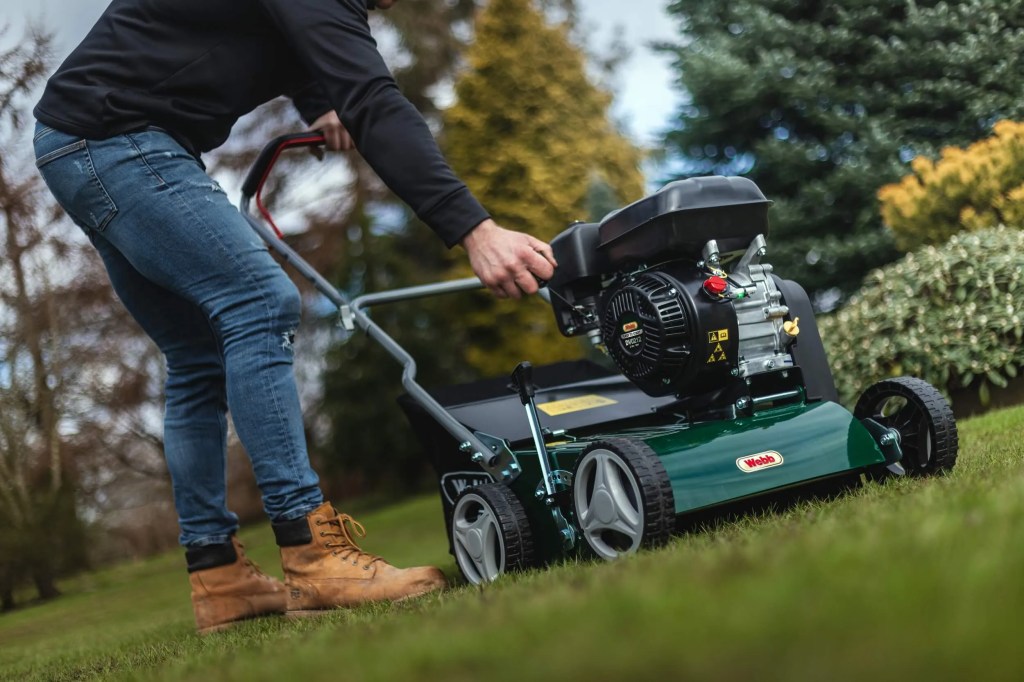

A lush, green lawn is every gardener’s dream, but achieving it takes more than just regular mowing and watering. One of the most common questions we hear is: “Do I really need to scarify my lawn?” The short answer is yes – scarifying is essential for keeping your lawn healthy, strong, and moss-free.
What is Lawn Scarification?
Scarification is the process of raking or mechanically removing layers of moss, thatch, and organic debris from your lawn.
Thatch is a build-up of dead grass, roots, and moss that sits between the green grass and the soil. A thin layer of thatch is natural and even protective, but too much creates problems. It stops water, oxygen, and nutrients from reaching the roots, leading to weak grass and moss invasion.
Scarifying breaks through this layer and allows your lawn to breathe, absorb nutrients, and grow stronger.
Signs Your Lawn Needs Scarifying
Not sure if scarifying is necessary? Look out for these signs:
- The lawn feels spongy underfoot
- Moss is spreading, especially in shady or damp spots
- Grass growth looks thin and patchy
- Water sits on the lawn after rain (poor drainage)
- Fertiliser doesn’t seem to make a difference
If you notice two or more of these issues, your lawn will benefit from scarification.
What Happens if You Don’t Scarify Your Lawn?
Skipping scarification may not harm your lawn immediately, but over time the problems build up:
- Moss takes over, especially in damp, shady areas
- Grass becomes weak and patchy
- The soil compacts, reducing oxygen and drainage
- Lawn treatments (feed, fertiliser, seed) become less effective
- Your lawn turns dull, thin, and unhealthy
Regular scarification prevents these issues, giving your lawn the best chance to thrive.
When is the Best Time to Scarify?
Timing makes all the difference:
- Spring (April–May): Light scarification encourages fresh growth after winter.
- Autumn (September–October): A deeper scarify removes summer thatch build-up and prepares the lawn for winter.
⚠️ Avoid scarifying during heatwaves, droughts, or frosty periods, as this can damage your grass.
How to Scarify Your Lawn
- Mow your lawn short – this exposes moss and thatch.
- Choose your tool – a rake for small lawns, or a powered scarifier for larger gardens.
- Work in two directions – first lengthways, then across the lawn.
- Clear all debris – collect moss and thatch immediately.
- Feed and overseed – apply lawn feed and scatter new seed to repair thin patches.
Benefits of Scarifying
- Encourages stronger root growth
- Reduces moss and weeds naturally
- Improves drainage and airflow
- Produces a denser, greener lawn
Scarifier Recommendations
Here are eight good options at different price & capacity points. Whilst powered scarifier do help make this an easier job, a manual tool can also be used.
| Product | Key Features | Best For / Pros & Cons |
|---|---|---|
| Hyundai HYSC210 Petrol Scarifier & Aerator | 212cc petrol engine, 400 mm working width, 19 hardened steel blades, large 45 L collector, variable depth adjuster. | Great for medium-to-large lawns (e.g. ~20×20m or larger). Powerful, deep scarification. Downside: heavier, needs maintenance (petrol, oil), more expensive. |
| Hyundai 1800W Electric Scarifier / Aerator / Lawn Rake (HYSC1800E) | Electric, wide 380 mm working width, cheaper than petrol. | Good for those who want electric, no fuss of petrol. Best for lawns where you have a power supply & don’t mind the cable. Less deep than petrol, less torque. |
| Einhell GC‑SA 1231/1 Electric Scarifier & Aerator | Electric, decent power, aerator + scarifier combo. Good middling price. | Ideal if you have a small-to-medium lawn and want something not too heavy, relatively easy to store. Balanced choice. |
| Hyundai HYSC1532E 1500W Electric Scarifier / Rake | More compact electric option. Light(er), more affordable. | Good for smaller lawns, or if you want something you can manage easily. The less powerful options will struggle on very dense thatch but will do fine for maintenance. |
| Oleo‑Mac SCA38R Rato R180 Petrol Scarifier 127cc | 127cc petrol, 38 cm working width, 15 fixed blades. | Petrol mid-range. If you need decent power and want to cover larger area more quickly, this will do well. More expensive & heavy but effective. |
| Webb 2‑in‑1 Electric Scarifier & Lawn Rake 1500W | “2-in-1” system: ability to use both raking and scarifying heads/cassettes, wide working width. | Flexible for someone who sometimes just needs a rake, sometimes a deeper scarification. Electric, so less noise/smell. Cable limitation applies. |
| Einhell GC‑SC 18/28 Li Cordless Scarifier (18V) | Cordless, 18V battery power, brushless motor, smaller scale. | Great if you want portability, no cable, maybe smaller lawn. Might struggle with very thick moss or dense thatch. Good “light maintenance” tool. |
| Draper Long‑Handled Steel Harrow Rake & Scarifier | Manual tool: long handled, steel tines / harrow style. No engine. | Best for small lawns, spot work, or if you want lowest cost/maintenance. Useful to “pull up” debris after mechanical scarification or use alone in milder situations. Physical work, slower. |
✅ Which Product to Choose: What to Consider
When picking a scarifier or rake, think about these:
- Size of lawn
- Small (say ≤ 100-200 m²): lighter electric or manual tools are sufficient.
- Medium-large: wider electric or petrol ones to cover more ground efficiently.
- Depth/power needed
- Thick thatch or moss: need more aggressive blades, petrol versions or high wattage electric.
- Regular maintenance: lighter scarification or rake will do.
- Noise, emissions, maintenance
- Petrol gives power but more noise, more upkeep.
- Electric / cordless quieter, cleaner but may be less powerful.
- Ease of use & storage
- Foldable handles, lightweight, easy to manoeuvre matter.
- Cord length or battery life important for electrics.
- Budget
- Manual or lower-power electrics are cheaper upfront.
- Petrol machines cost more, higher running costs.
Related Tools & Extras to Help
Also worth considering some ancillary tools:
- A good quality steel rake to pull up debris after scarification.
- A roller if your lawn has bumps after aeration / scarification.
- Hollow-tine aerators or a combined scarifier/aerator for improved water flow. (Some of the above options are combined units.)
Do you have any questions of scarifying your lawn? Get in touch and let out expert answer your questions!



 Garden Review UK
Leave a comment