

The Big Butterfly Count 2025 commences today, running from July 18th to August 10th. This vital citizen-science initiative, championed by Butterfly Conservation, launches as a crucial grassroots effort following last year’s alarming count, which marked the worst in its 14-year history.
Despite a warmer spring offering some optimism, concerns linger about potential declines caused by drought and heatwaves. And, true to typical British summer fashion, as I write this, the weekend is a complete washout, unfortunately preventing me from heading out for my count just yet!
In 2024, participants recorded an average of just seven butterflies per 15‑minute count, nearly half of 2023’s average of twelve—marking the lowest numbers ever. The decline impacted roughly 81% of UK species including Common Blue, Holly Blue, Small Tortoiseshell, Painted Lady, and Scotch Argus, prompting Butterfly Conservation to declare a Butterfly Emergency.
In my garden there is definitely a massive increase this year, and that’s thanks to sunny spells paired with adequate rainfall led to early and widespread butterfly emergence across the country. Sightings of species such as peacocks, gatekeepers, and marbled whites are up—and appearances of butterflies in northern regions have increased.
Why Your 15 Minutes Matter
Everyone is encouraged to take part no matter where they live—be it urban garden, balcony, park or allotment. All it takes is a sunny spot, 15 minutes, and a watchful eye for butterflies or day‑flying moths. Records can then be logged through the free Big Butterfly Count app or the official website.
Dr. Richard Fox, Head of Science at Butterfly Conservation, calls butterflies “bio‑indicators” of environmental health. Although this summer may feel vibrant, long‑term declines remain deeply concerning, and a brighter season does not automatically reverse decades of loss.
What You Might See
Many popular summer species are particularly abundant this year:
- Peacock, Gatekeeper, and Marbled White are flourishing thanks to early broods and good spring conditions.
- Purple Emperors experienced a record surge at Sussex’s Knepp Rewilding Project, with observers spotting 283 individuals in a single day. This resurgence highlights the power of rewilding and habitat restoration.
- Conversely, rarer species like Large Blue and Ringlet remain scarce, hindered by dry conditions and habitat sensitivity. The enigmatic Small Tortoiseshell, once widespread, continues to decline sharply across southern England.
How to recognise UK Butterfield Species
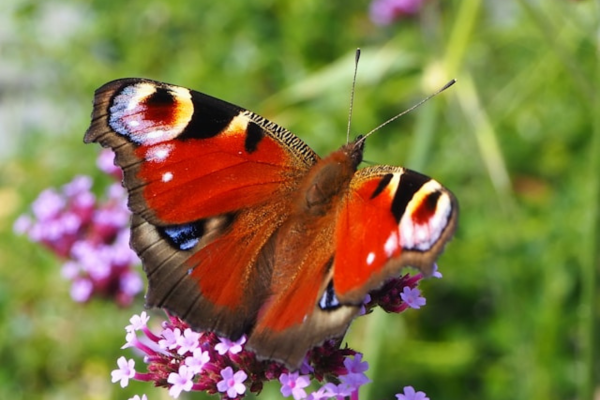
Peacock Butterfly
Description: Deep-red wings with prominent black markings and large blue “eyespots” resembling a peacock’s tail feathers on both forewings and hindwings.
Recognition: The distinctive eyespots are the key identifier.

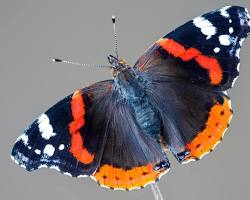
Red Admiral Butterfly
Description: Mostly black wings with broad red-orange stripes across the forewings and along the outer edge of the hindwings, and white spots near the tips of the forewings.
Recognition: The striking black, red, and white pattern makes it easily identifiable.
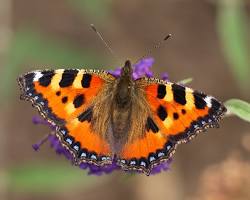
Small Tortoiseshell Butterfly
Description: Reddish-orange wings with black and yellow markings on the forewings and a border of blue spots around the edge of the wings.
Recognition: Its smaller size compared to other orange-red butterflies and the blue spots on the wing edges are distinguishing features.
Common Blue Butterfly
Description: Males are bright blue with a narrow brown border and white fringe. Females are typically brown with a blue “dusting” near the body and orange spots on their undersides.
Recognition: Look for the vibrant blue of the males and the orange spots on the underside of both sexes.

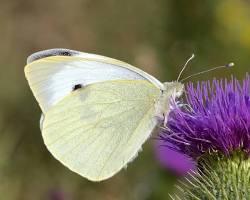
Large White Butterfly
Description: Brilliant white wings with prominent black tips to the forewings. Females often have two black spots and a dash on each forewing.
Recognition: Its large size and distinct black wingtips distinguish it from other white butterflies.
Brimstone Butterfly
- Description: Medium-sized with unique leaf-shaped wings. Males are bright lemon-yellow, while females are pale greenish-white with orange spots in the middle of each wing.
- Recognition: The pointed, veiny wings and the distinct yellow of the male or greenish-white of the female are key features.
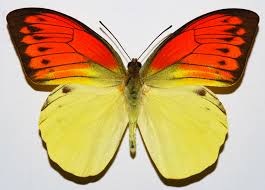
Meadow Brown Butterfly
Description: Brown with washed-out orange markings on the forewings. Most identifiable by two eyespots (with one white pupil) on their forewings.
Recognition: Its plain brown appearance with subtle orange and the prominent eyespots on the forewings are good indicators.
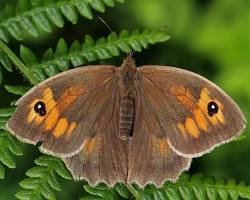
Speckled Wood Butterfly
Description: Warm brown wings liberally speckled with creamy-yellow spots. It has one eyespot on the forewings and three on the hindwings.
Recognition: The speckled pattern and the number and placement of eyespots are unique.
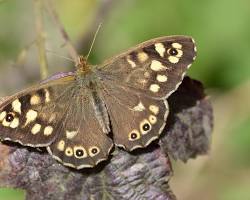
Gatekeeper Butterfly
Description: Brown and orange wings with a distinct black spot containing two smaller white dots on each forewing. Males are slightly smaller with dark markings on the forewings.
Recognition: Similar to the Meadow Brown, but typically brighter orange with a black spot containing two white dots.
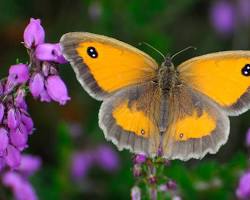
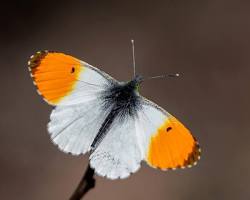
Orange-tip Butterfly
Description: Males are white with bold orange patches on the forewings and light grey wingtips. Females are white with grey-black wingtips. Both have mottled grey-green undersides.
Recognition: The bright orange tips on the male’s wings are unmistakable. The mottled green underside of the hindwings is a good identifier for both sexes.
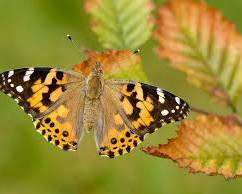
Painted Lady Butterfly
- Description: Orange with black tips to the forewings adorned with white spots, and black spots on the hindwings and forewings. It’s often larger and paler than the small tortoiseshell.
- Recognition: Its large size, orange and black pattern with white spots, and migratory nature.
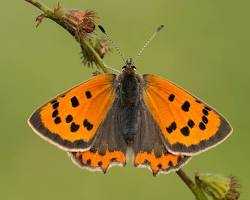
Small Copper Butterfly
Description: Bright orange forewings with dark brown spots and a thick, dark brown margin. The hindwings are dark brown, banded with orange.
Recognition: Its small size and vibrant copper-orange coloration with dark spots.
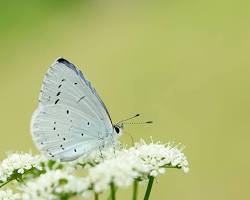
Holly Blue Butterfly
Description: Bright blue wings with black spots on its silvery underside. Females have distinct black wing edges on their upperwings.
Recognition: Its delicate bright blue color and the lack of orange spots on the underside (distinguishing it from the Common Blue).
How You Can Help Butterflies Thrive
Simple actions at home can make a big difference:
- Create a Wild Space: Let patches of grass grow long, plant nectar-rich flowers like ivy, and reduce lawn mowing—this can nearly double butterfly numbers in both rural and urban gardens.
- Join the Count: Encourage friends or children to take part. Last year, over 85,000 volunteers submitted more than 143,000 counts, gathering a staggering 935,000 butterfly and day‑flying moth observations.
- Support Change: Butterfly Conservation continues to press for policy action, including strict bans on neonicotinoid pesticides and declarations of a broader Nature Emergency.
2025 presents a more promising outlook for butterflies, but it’s still early days. The Big Butterfly Count provides critical data on whether this summer is a genuine rebound—or simply an aberration in a decade-long decline. Whether you’re in a bustling city or peaceful garden, your 15‑minute count is a vital contribution to science and conservation.
Take action today: Visit bigbutterflycount.butterfly-conservation.org or download the app to join the Count.
Let’s give nature a helping hand—even just 15 minutes at a time.





 Garden Review UK
Leave a comment