
Your questions answered…

If you’ve been enjoying the delicate, daisy-like blooms of cosmos in your summer garden, you might be wondering: “Should I be deadheading them?” The short answer is a resounding yes — and here’s why this simple gardening task makes a significant difference for a more vibrant, lasting display.
Why Deadhead Cosmos? Unlock More Blooms!
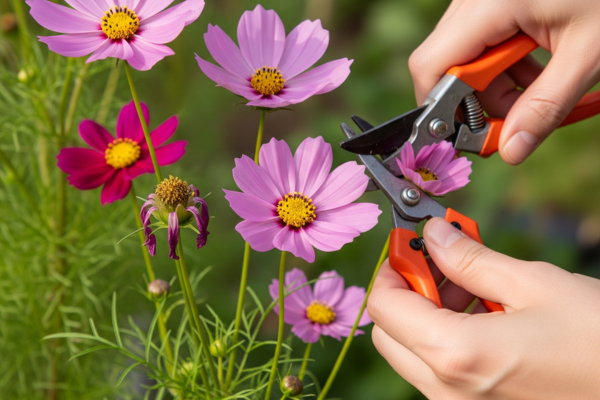
Deadheading is the process of removing faded or spent flowers from a plant. For cosmos, which are naturally prolific bloomers, deadheading is particularly beneficial. It encourages your plants to continuously produce new flowers rather than diverting their energy into forming seeds.
Here are the main benefits of regularly deadheading your cosmos:
- Prolonged Blooming Season: Regular deadheading can keep your cosmos flowering profusely from early summer right into autumn, extending your garden’s beauty.
- Tidier Garden Appearance: Removing spent blooms instantly improves the aesthetic of your flower beds, keeping them looking neat, fresh, and well-maintained.
- Enhanced Plant Health: Deadheading helps reduce the likelihood of fungal issues and pest problems that can arise from decaying flowers, contributing to overall healthier plants.
How to Deadhead Cosmos: A Simple Guide
Deadheading cosmos is incredibly simple and satisfying, even for beginner gardeners.
Here’s how to do it:
- Locate Faded Blooms: Identify any cosmos flowers that have started to wilt, fade, or turn brown.
- Pinch or Snip: Gently pinch or use small snips or secateurs to cut off the faded flower head.
- Cut to the Right Spot: Make your cut just above the nearest set of healthy leaves or a developing side stem. This encourages new growth and more blooms.
Gardening Tip: During peak bloom season, check your cosmos every few days. They grow quickly, and new flower buds are constantly forming! Consistent deadheading will yield the best results.
Should You Let Some Cosmos Go to Seed?
While deadheading maximizes blooms, there are instances where you might want to let a few flowers remain on the plant to mature.
- Seed Collection: If you’re interested in collecting cosmos seeds for next year’s planting, allow a few flower heads to dry completely on the plant towards the end of the season. Cosmos seeds are easy to collect, store, and propagate.
- Self-Seeding: For a naturalized, wildflower-style garden bed, you can encourage cosmos to self-sow by leaving some spent blooms. If conditions are right, new cosmos plants will emerge the following spring.
Is Deadheading Cosmos Worth It?
Deadheading cosmos isn’t strictly mandatory – your plants will still provide a lovely display for a good while without it. However, if your goal is the most spectacular display and the longest possible flowering season, then deadheading is absolutely worth the effort.
Just a few minutes spent each week on this easy task can truly transform your garden border from merely nice to truly stunning.
Happy gardening from The Garden-Review Team!





 Garden Review UK
Leave a comment