
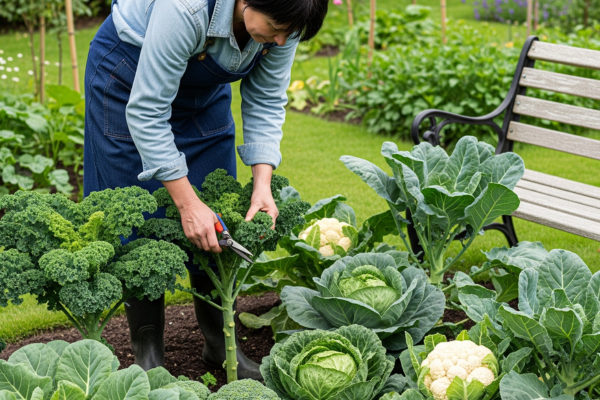

Brassicas like kale, cabbage, broccoli, cauliflower, and Brussels sprouts are a mainstay for the British vegetable garden. Yet, while much emphasis is laid on feeding and watering these leafy greens, one important task often goes ignored: pruning.
In this pruning guide , we will discuss why you need to prune brassicas for healthy growth, better crop yields, and pest control. And some simple and practical tips about how and when to prune.your brassicas.
Reasons to Prune Brassicas
It might not be the first task on your gardening list, pruning brassicas has some things that matter very much. Here’s why:
- Air Circulation
Strong foliage covers can trap moisture causing fungal diseases such as powdery mildew or clubroot. So, when you prune, you increase air circulation around the plant, and that gets it to stay drier and healthier. - Light Penetration
By removing extra foliage, you allow sunlight to reach developing heads or shoots, increasing photosynthesis and strengthening growth. - Better Yield Quality
Defoliating plants allow nutrition to be diverted toward the formation of good-sized heads or florets. This is especially necessary for cauliflower, broccoli, and cabbages. - Pest Control
Leaves that are yellowed or damaged can harbour aphids, whiteflies, and caterpillars. By pruning these leaves, the hiding spots of pests can be reduced, as can the spreading of infestation.
When to Prune Brassicas
Different Brassicas types determine the pruning times:
Cabbage & Cauliflower: Begin to prune as heads mature.
Kale & Sprouting Broccoli: Require regular maintenance pruning throughout the season.
Brussels Sprouts: Lower leaves are pruned when sprouting commences, and topping of the plant will be useful in encouraging sprouting later.
Never prune when it is wet; wetter conditions will promote the entry of disease through the cuts.
How to Prune Brassicas: Step-by-Step
You won’t need any special tools, just a pair of sharp secateurs or scissors and a clean cloth to wipe the blades between cuts to prevent the spread of disease.
Step 1: Check the Plant
- Look for:
- Yellowing or dying leaves
- Leaves touching the soil
- Damaged or pest-ridden foliage
Step 2: Remove Lower Leaves
Begin removing the outermost and lowest leaves-provided they are touching the soil. These may rot away first and may attract slugs.
Step 3: Thin the Canopy
On kale or purple sprouting broccoli, thin out a few interior leaves so that the centre is open. This will allow more air to pass through and also allow the growth of new shoots.
Step 4: Deadhead After Harvest (For Some Varieties)
Main heads or main shoots should be cut back to stem just above a healthy side shoot to encourage further cropping.
Bonus Tips
No over-pruning: Brassicas require plenty of foliage to carry on photosynthesis.
Prunings can be thrown on the compost unless showing signs of disease, in which case, destroy separately.
Use clean, sharp tools to prevent infection.
Brassicas may look like a trivial task during pruning, but it goes a long way in better crop performances. Whether your kale is in raised beds or there’s a row of Brussels sprouts sprouting on your allotment, regular pruning means good health of the plants and a better harvest.
Do add this to your routine for the season- your cabbages will be grateful for it.


 Garden Review UK
Leave a comment