
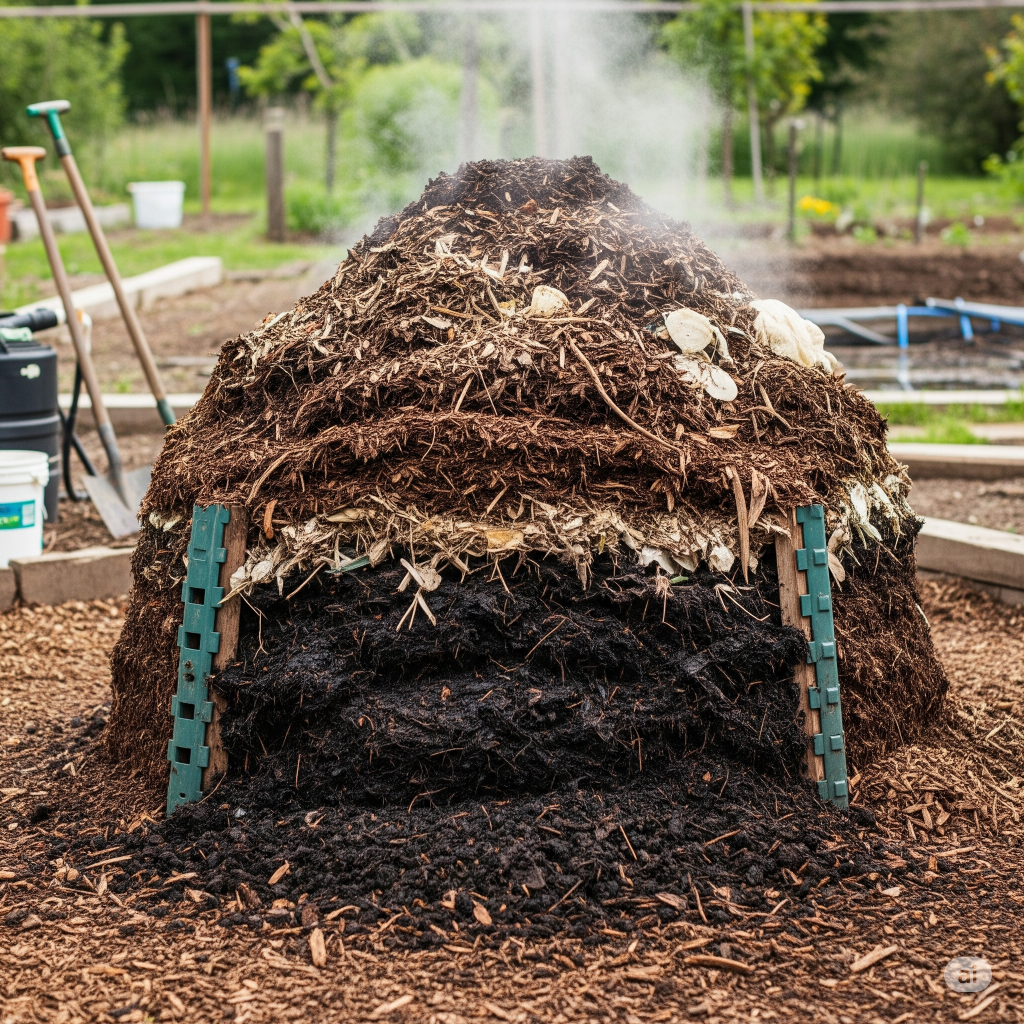
A Fast and Efficient Way to Make Garden Gold

Composting is one of the most rewarding things any gardener can do. It turns kitchen scraps, garden waste, and even cardboard into nutrient-rich, crumbly compost — often referred to as “black gold.” But did you know there’s more than one way to compost?
If you’re looking for quicker results and a more efficient process, hot composting might be the method for you. In this guide, we’ll explain what hot composting is, how it works, and how you can start your own hot compost heap in your garden or allotment.
- A Fast and Efficient Way to Make Garden Gold
- Greens (Nitrogen-Rich)
- Browns (Carbon-Rich)
- 1. Build a Pile That’s Big Enough
- 2. Layer and Mix
- 3. Check Moisture
- 4. Monitor Temperature
- 5. Turn Regularly
What Is Hot Composting?
Hot composting is a method of composting that uses high internal temperatures — typically between 55–70°C (130–160°F) — to rapidly break down organic material. Unlike cold composting (where a heap might take a year or more to mature), a well-managed hot compost pile can produce usable compost in as little as 4 to 6 weeks.
This method requires the right balance of greens (nitrogen-rich materials) and browns (carbon-rich materials), sufficient moisture, and proper aeration to support thermophilic bacteria — microorganisms that thrive in higher temperatures and accelerate the decomposition process.
Benefits of Hot Composting
✅ Faster results – Compost is ready in weeks, not months.
✅ Kills weed seeds and pathogens – High temperatures neutralise many potential garden problems.
✅ Reduces volume quickly – Ideal for gardens with lots of waste to process.
✅ Produces fine, crumbly compost – Perfect for mulching or soil improvement.
What Materials Can You Use?
To succeed with hot composting, you need a good balance of:
Greens (Nitrogen-Rich)
- Grass clippings
- Vegetable peelings
- Coffee grounds
- Manure (herbivore only)
Browns (Carbon-Rich)
- Dry leaves
- Cardboard and paper (shredded)
- Straw
- Sawdust
Aim for a rough 2:1 ratio of browns to greens, and make sure materials are chopped or shredded where possible to speed things up.
How to Start a Hot Compost Heap
1. Build a Pile That’s Big Enough
Size matters in hot composting. Your pile should be at least 1m³ (1x1x1m) to retain heat properly. You can use a compost bin, wooden pallet system, or simply pile it in a corner of the garden.
2. Layer and Mix
Alternate layers of greens and browns, and mix them together to ensure good aeration and even decomposition.
3. Check Moisture
The pile should feel like a wrung-out sponge — damp but not soggy.
4. Monitor Temperature
Use a compost thermometer, or just feel the heat with your hand (carefully!). The centre should feel hot within a couple of days.
5. Turn Regularly
To keep oxygen flowing and maintain high temperatures, turn the pile every 3 to 5 days using a garden fork or compost aerator.
Common Hot Composting Mistakes
- Pile too small? It won’t retain heat.
- Too wet or too dry? Adjust by adding more browns (if soggy) or a splash of water (if dry).
- Not turning enough? It’ll slow down the process.
- Too much of one material? Balance greens and browns carefully.
Is Hot Composting Right for You?
Hot composting is ideal if:
- You want fast results
- You generate a lot of garden or kitchen waste
- You have space for a large pile or bin
- You’re happy to put in a bit of effort (regular turning and monitoring)
If you’d prefer a slower, low-maintenance approach, traditional cold composting might suit you better — but for the impatient gardener, hot composting delivers in spades.
Hot composting is a brilliant way to speed up the composting process and create nutrient-dense compost that will supercharge your garden soil. With a bit of know-how and some regular attention, you can turn everyday waste into rich, crumbly compost in just a few weeks.
At Garden-Review, we’re all about practical gardening tips that get results. So why not give hot composting a try this season — your plants (and your soil) will thank you!
Related Reads:
- Cold vs Hot Composting: Which is Right for Your Garden?
- Best Compost Bins for UK Gardens in 2025
- What Not to Put in Your Compost Bin



 Garden Review UK
Leave a comment